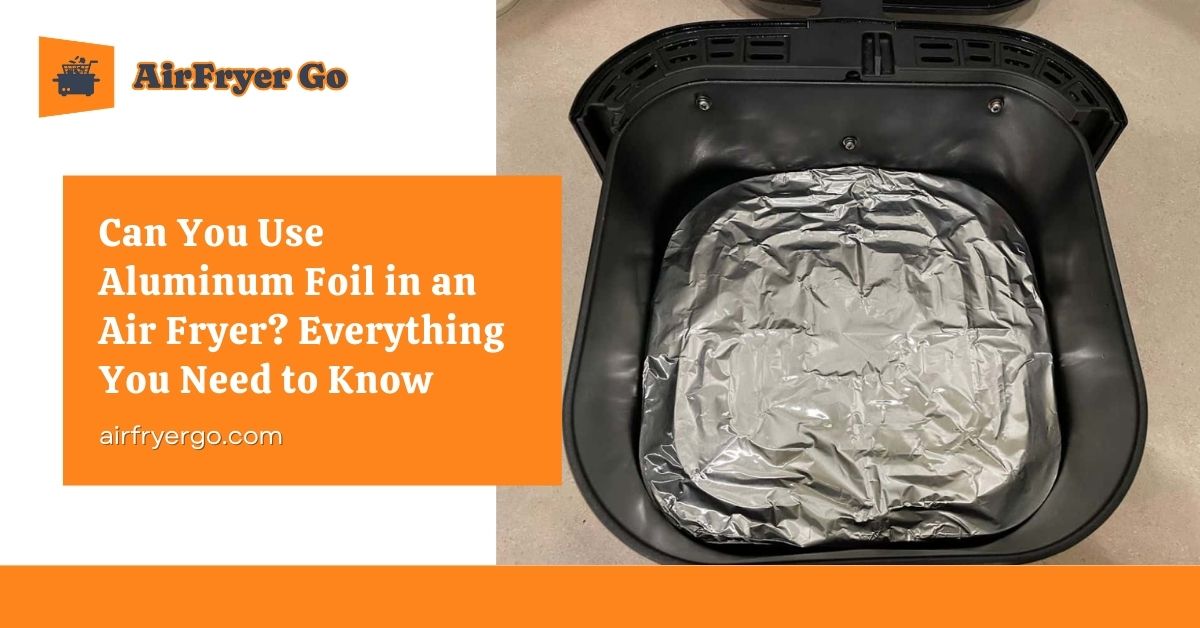
Many home cooks ask, can you use aluminum foil in an air fryer without risking a fire or ruining their dinner? At AirFryer Go, we know that the difference between a mess-free meal and a kitchen hazard comes down to one thing: understanding airflow.
While foil is a great tool for easy cleanup, using it incorrectly can “choke” your machine’s convection system or, worse, cause a safety risk. In this guide, we’ll show you the golden rules for using liners safely and reveal which kitchen staples—from Pyrex to parchment—are truly air fryer-approved.
>>> Read More: How to Use an Air Fryer: The Ultimate Master Guide (From Unboxing to Pro)
Can You Use Aluminum Foil in an Air Fryer?
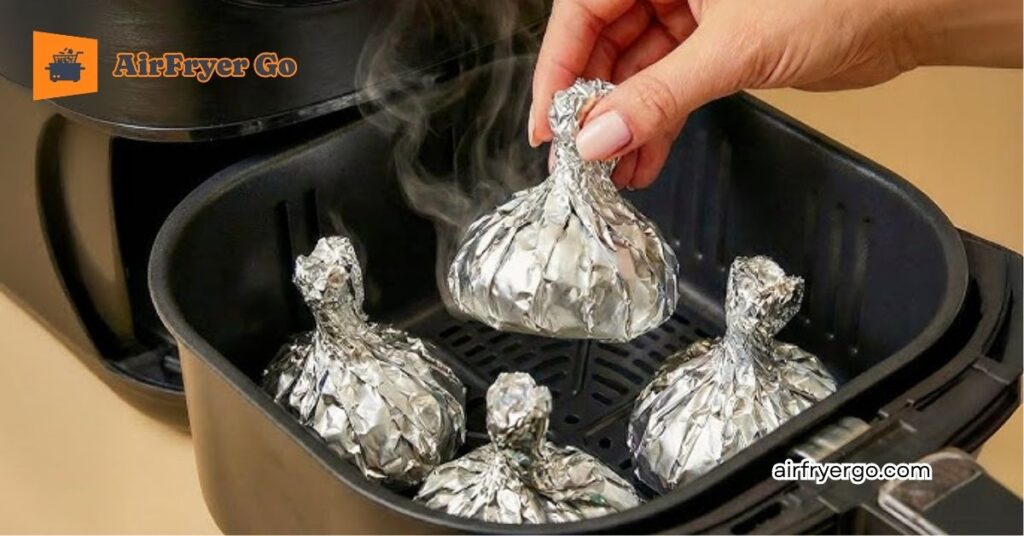
At AirFryer Go, we get this question daily. The quick answer is yes, you can use aluminum foil—but unlike a traditional oven, you can’t just toss it in and forget it.
The “catch” lies in the very thing that makes your air fryer so efficient: High-Velocity Airflow.
The “Choke” Effect
An air fryer is essentially a compact wind tunnel. Hot air must circulate under and around your food to create that signature crunch.
- The Catch: If you cover the entire bottom of the basket with foil, you block the air vents.
- The Result: Your food will be soggy on the bottom, burnt on the top, and your machine’s fan motor will have to work twice as hard, potentially shortening its lifespan.
The “Flying Foil” Fire Hazard
Because the fans in a year model are incredibly powerful, lightweight foil can act like a sail.
- The Risk: If the foil isn’t weighed down by enough food, the air currents can suck it upward into the heating element.
- The Danger: Metal hitting a red-hot heating coil is a primary cause of air fryer fires and permanent electrical damage.
AirFryer Go Pro Tip: Never put foil in the basket during the preheating phase. Always wait until you are ready to place the food on top to ensure the foil stays exactly where it belongs—at the bottom.
The “Safe vs. Danger” Master List
Navigating what goes into your air fryer shouldn’t feel like a guessing game. At AirFryer Go, we’ve categorized the most common kitchen materials based on their heat resistance and airflow compatibility.
Before you slide that basket in, check this master list to ensure your meal stays crispy and your kitchen stays safe.
AirFryer Go: The Compatibility Matrix
| Material | Safe? | The “Expert” Reason |
| Aluminum Foil | YES | Perfect for mess-free cooking, provided it doesn’t block the air vents. |
| Parchment Paper | YES | Best for delicate foods like fish; use perforated liners for maximum airflow. |
| Metal Pans | YES | Any oven-safe cake pan or muffin tin is air fryer safe. |
| Pyrex / Glass | CAUTION | Only use tempered glass labeled “Oven Safe.” Avoid cold-to-hot shock. |
| Ceramic Plates | YES | Must be oven-safe; avoid fine china or plates with gold/silver trim. |
| Silicone Molds | YES | Great for egg bites or muffins; ensure they are rated for 450°F. |
| Plastic | NO | Even “microwave-safe” plastic will melt and release toxic fumes. |
| Cardboard | NO | A major fire hazard. Never reheat pizza in its delivery box! |
| Paper Towels | NO | Can easily be sucked into the heating element and ignite. |
The “Can I Use It?” Golden Rule
If you’re ever unsure about a dish or a liner, ask yourself these two questions:
- Is it oven-safe? If it can’t go in a 400°F oven, it definitely can’t go in an air fryer.
- Does it block the wind? If the material covers every hole in the basket, your food won’t cook correctly.
AirFryer Go Safety Note: Even “safe” materials like foil or parchment paper must be weighed down. In the high-velocity environment of a year air fryer, lightweight liners can fly upward, hit the heating coil, and cause a fire in seconds.
Cookware Compatibility: Can I Use My Oven Dishes?
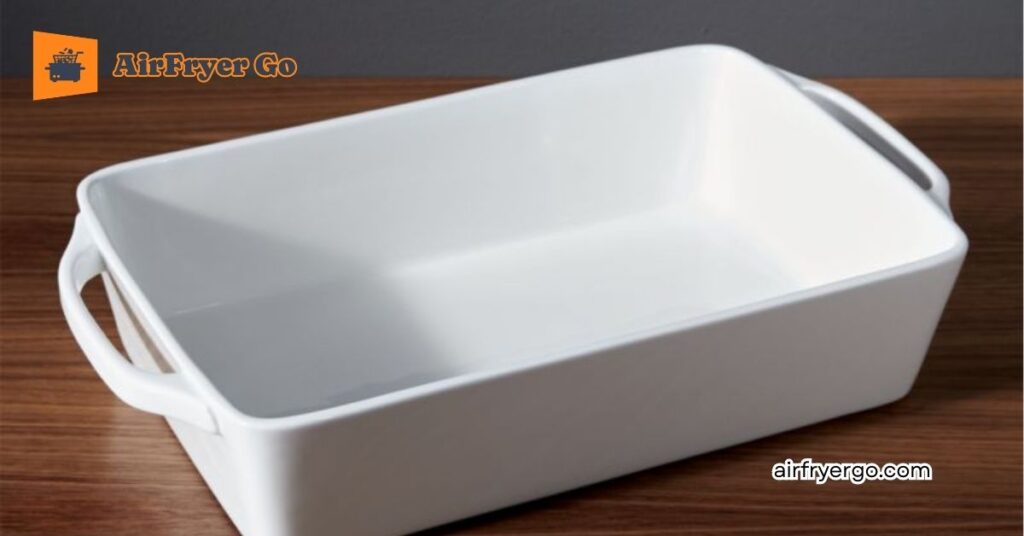
Many cooks assume that if a dish is “microwave safe,” it’s ready for the air fryer. At AirFryer Go, we want to clear up that dangerous misconception. The air fryer is a high-heat convection oven, meaning your cookware must withstand intense, direct infrared heat and rapid temperature shifts.
Here is the definitive guide to which kitchen staples can handle the heat.
1. Pyrex & Glassware: The “Shock” Factor
The most common question we get is: Is Pyrex air fryer safe? The answer is yes, but with a major caution.
- Thermal Shock: Air fryers heat up much faster than traditional ovens. If you take a cold Pyrex dish from the fridge and slide it into a preheated 400°F air fryer, the glass can shatter instantly.
- The Rule: Only use tempered glass labeled “Oven Safe.” Always let the dish come to room temperature before cooking, and never exceed the manufacturer’s temperature rating (usually 425°F).
2. Ceramic & Stoneware: Check the Bottom
Most modern ceramic plates and ramekins are perfectly safe. However, the high-velocity air can cause “vibration wear” on delicate items.
- Safe: Solid white ceramic, stoneware, and porcelain labeled oven-safe.
- Avoid: Any plate with gold or silver metallic trim. The air fryer’s heating element can cause these to spark or peel. Also, avoid “fine china,” which is too thin to handle the 400°F blast.
3. Metal Pans: The Best Performance
Because the air fryer is a convection oven, any metal pan you use in your big oven works here—provided it fits!
- Aluminum & Steel: Cake pans, muffin tins, and cast iron skillets are excellent. They hold heat well and help sear the bottom of your food.
- Pro Tip: Choose “dark” or “matte” metal pans over shiny ones; they absorb heat more efficiently in an air fryer environment.
AirFryer Go Compatibility Checklist
| Cookware Type | Max Temp (Approx) | AirFryer Go Verdict |
| Tempered Glass (Pyrex) | 425°F | SAFE (Avoid rapid temp changes) |
| Silicone Molds | 450°F | SAFE (Excellent for egg bites) |
| Cast Iron | 500°F+ | SAFE (Great for searing steak) |
| Corelle Dishes | 350°F | CAUTION (Can break at high temps) |
| Standard Glass | N/A | DANGER (Will likely shatter) |
How to Test Your Dish
If you aren’t sure if a dish is safe, look for the “Oven Safe” symbol on the bottom (a tiny oven icon). If it only says “Microwave Safe,” do not use it. Microwave-safe items are designed to resist vibrating water molecules, not the intense dry heat of a convection fan.
AirFryer Go Pro Tip: When using a dish inside your basket, ensure there is at least one inch of space between the dish and the basket walls. This allows the air to circulate around the dish, ensuring the center of your meal gets hot.
The “Danger Zone”: What Should NEVER Go Inside?
>>> Read More: Top Air Fryer Tips and Tricks: Master Your Air Fryer Like a Pro
While the air fryer is incredibly versatile, it is not a “catch-all” appliance. At AirFryer Go, we’ve seen the aftermath of “experimental” reheating, and the results can range from a ruined dinner to a permanent fire hazard.
In the high-heat, high-velocity environment of a 2026 air fryer, these items are strictly in the Danger Zone.
1. Plastic: The Melting Point
Many people assume “microwave-safe” plastic containers are fine for a quick reheat. They are not.
- The Danger: Air fryers use intense dry heat, not microwave radiation. Plastic will melt onto your basket, ruin the non-stick coating, and—most importantly—release toxic chemical fumes into your food and kitchen.
- The Verdict: NEVER put plastic, Tupperware, or plastic wrap (Saran wrap) inside.
2. Cardboard & Paper Bags: The Flashpoint
It’s tempting to slide a pizza box or a fast-food paper bag directly into the basket to save time.
- The Danger: Cardboard and thin paper have a low combustion point (around 451°F, but even lower in high-airflow environments). The powerful fan can lift a corner of the paper toward the red-hot heating element, causing it to ignite instantly.
- The Verdict: NEVER use cardboard or standard brown paper bags.
3. Paper Towels: The “Flying Hazard”
Some cooks use paper towels to soak up grease during cooking. This is the #1 cause of air fryer fires.
- The Danger: Paper towels are lightweight. As soon as the fan starts, they are sucked upward into the heating coil. Within seconds, you’ll have smoke and flames.
- The Verdict: STRICTLY PROHIBITED. Use perforated parchment liners instead, which are designed to stay flat and handle the heat.
4. Wood & Bamboo: The Drying Effect
Using wooden skewers or bamboo steamers might seem natural, but the air fryer’s dry heat is brutal on organic materials.
- The Danger: Wood can crack, splinter, or even char under the direct heat of an air fryer.
- The Verdict: CAUTION. If you must use wooden skewers, soak them in water for at least 30 minutes first, just as you would for an outdoor grill.
AirFryer Go “Red Light” Checklist
| Item | Why It’s Dangerous | The Better Alternative |
| Pizza Box | Fire hazard / Burnt taste | Reheat on the bare rack or foil. |
| Plastic Bowl | Melting / Toxic fumes | Use a ceramic or metal dish. |
| Styrofoam | Chemical leaching / Melting | Transfer food to a plate first. |
| Wax Paper | Wax melts and smokes | Use Parchment Paper only. |
AirFryer Go Safety Rule: If an item doesn’t have an “Oven Safe” stamp on the bottom, treat it as a Danger Zone item. When it comes to high-velocity convection heat, it’s always better to be safe than to be shopping for a new air fryer (or a new kitchen).
The Science of Airflow: Don’t Block the Heat
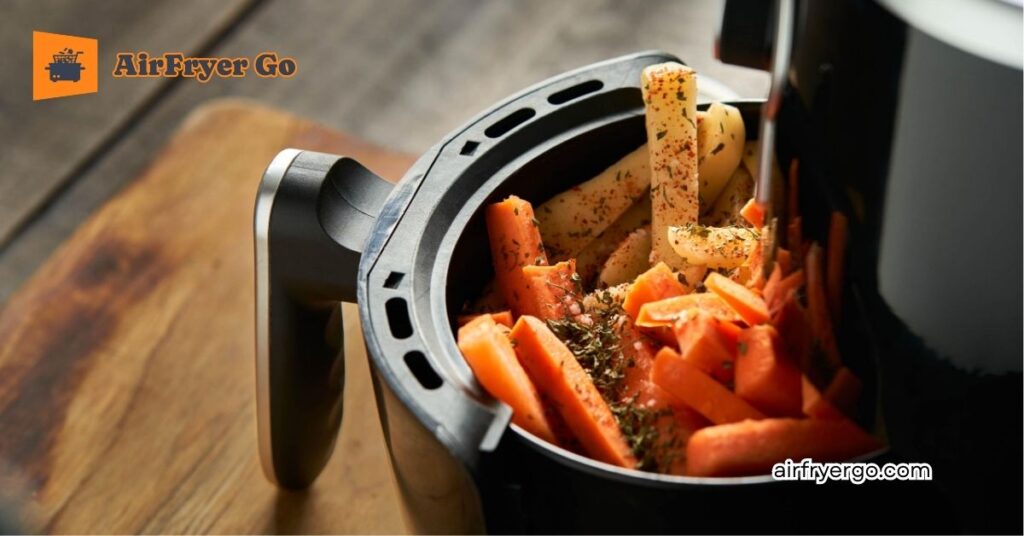
Understanding the “Air” in Air Fryer is the secret to moving from a beginner to a pro. At AirFryer Go, we always say: It’s not a small oven; it’s a high-speed wind tunnel. If the wind can’t move, your food won’t cook.
Here is the physics of why your placement of foil or parchment paper matters more than the temperature you set.
1. The “2/3 Rule”: Give the Wind a Path
The heating element sits directly above a powerful fan that blasts air downward. This air needs to travel through the basket, hit the bottom, and circulate back up.
- The Science: If you line the entire bottom of your basket with foil, you create a “dead zone.” The hot air gets trapped above the foil, while the bottom of your food stays cold and soggy.
- The Fix: Always leave at least one inch of space around the edges of your foil or liner. This creates a “slipstream” for the air to cycle properly.
2. The “Weighting” Law: Prevent the Flyaway
In 2026, air fryer fans are more powerful than ever. Lightweight materials like parchment paper or thin foil are essentially “sails” in a storm.
- The Danger: If you put a liner in during the preheating phase without food on top, the fan will suck that liner straight into the heating coil.
- The Result: A charred liner, a smoke-filled kitchen, and a potential fire.
- The Fix: Never place a liner in the basket unless you are ready to put at least a few ounces of food on top to anchor it down.
3. Perforated vs. Solid Liners
You may have noticed that professional air fryer liners have holes in them.
- Why they work: These holes allow the air to pass through the paper, hitting the bottom of your chicken or fries directly.
- The AirFryer Go Advice: If you are using DIY foil, use a fork to poke several holes in it. This mimics a professional liner and ensures your food gets that 360-degree “shatter-crisp” texture.
Airflow Efficiency Checklist
| Placement Method | Airflow Result | Cooking Outcome |
| Fully Lined Bottom | Blocked | Burnt top, raw/soggy bottom. |
| Small Foil “Boat” | Partial | Good for sauces, slower cooking. |
| Perforated Liner | Optimal | Maximum crunch, even browning. |
| No Liner (Bare Rack) | Perfect | The fastest, crispiest result. |
AirFryer Go Pro Tip: If you are cooking something very greasy (like bacon), don’t line the basket. Instead, put a piece of bread or a small amount of water in the bottom drawer (under the basket). This catches the drippings and prevents the grease from smoking without blocking the air hitting your food.
Troubleshooting: Common Air Fryer Safety Mistakes
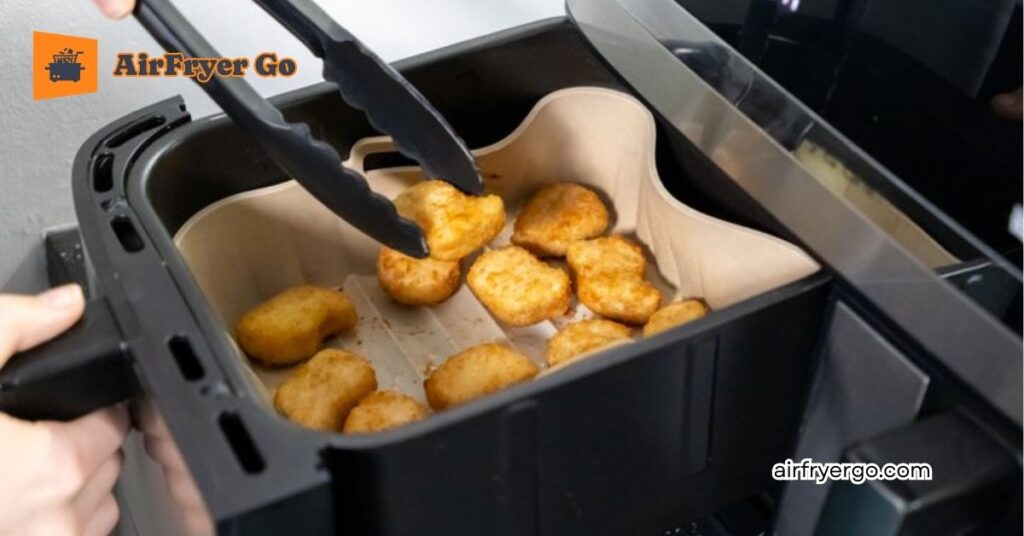
Even the most experienced home cooks can run into trouble when combining high-heat convection with loose liners or the wrong cookware. At AirFryer Go, we’ve analyzed the most common “reheat fails” and safety hiccups of year to help you stay ahead of the curve.
If your kitchen is filling with smoke or your food is coming out uneven, one of these common mistakes is likely the culprit.
1. The “Smoke Show” (Burning Liners)
- The Mistake: Placing parchment paper or foil in the basket during the preheating phase without any food on top.
- The Science: Without the weight of your ingredients, the powerful internal fan sucks the lightweight liner directly into the red-hot heating element.
- The Fix: Never add your liner until the very moment you are ready to place your food. If the machine is already hot, use tongs to hold the liner down while you add the ingredients.
2. The “Shatter” (Glassware Failure)
- The Mistake: Taking a glass Pyrex dish directly from the refrigerator and placing it into a 400°F air fryer.
- The Science: This causes Thermal Shock. The rapid expansion of the glass molecules on the outside versus the cold interior causes the structure to fail.
- The Fix: Always let glassware sit on the counter for 15–20 minutes to reach room temperature. Alternatively, start the air fryer at a lower temperature (300°F) for the first 5 minutes to “temper” the glass before cranking up the heat.
3. The “Soggy Bottom” (Blocked Vents)
- The Mistake: Using a piece of foil that is too large and folding it up the sides of the basket.
- The Science: Air fryers rely on vertical airflow. By “walling off” the sides with foil, you prevent the air from ever reaching the bottom of your food.
- The Fix: Trim your foil so it only covers the center area where the food sits. Leave at least a half-inch gap around the entire perimeter of the basket.
AirFryer Go Quick Diagnosis Table
| Symptom | Probable Cause | Instant Solution |
| White Smoke | Grease dripping onto the bottom tray. | Place a slice of bread in the bottom to soak up oil. |
| Black Smoke | Liner or food hitting the heating coil. | Turn off immediately; check for “flying” foil. |
| Uneven Browning | Overcrowding or blocked air holes. | Shake the basket; ensure foil has perforations. |
| Sparking / Arcing | Metallic trim on plates or loose foil edges. | Use only plain, oven-safe ceramic or smooth foil. |
A Note on “Aerosol” Sprays
Many users spray their foil with non-stick aerosol cans (like PAM).
- The Danger: Most aerosol sprays contain lecithin, which can build up a gummy residue on your basket and heating element over time, eventually causing it to smoke at lower temperatures.
- The AirFryer Go Alternative: Use a refillable oil mister with pure Avocado or Olive oil. It’s safer for the machine and much healthier for you.
AirFryer Go Safety Check: If you ever see flames or heavy smoke, do not open the drawer. Unplug the unit immediately and let the lack of oxygen naturally extinguish the flare-up. Opening the drawer provides a rush of oxygen that can make the fire larger.
FAQ: Quick Answers for Busy Cooks
1. Can you put metal in an air fryer?
Yes! This is the biggest point of confusion for those transitioning from microwaves. Because an air fryer is a convection oven, any oven-safe metal (stainless steel, aluminum, cast iron) is perfectly safe. Just ensure it doesn’t touch the heating element.
2. Is it safe to put foil in the air fryer with acidic foods?
Use caution. Foods like lemons, tomatoes, or vinegar-based sauces can react with aluminum foil, causing it to break down and leave a metallic taste (or small holes in the foil).
- The AirFryer Go Fix: Use parchment paper for acidic recipes to keep your flavors pure and your foil intact.
3. Can I use a regular ceramic bowl?
Only if it’s labeled “Oven Safe.” Many decorative ceramic bowls or everyday cereal bowls are not designed to handle the rapid temperature spikes of an air fryer.
- The Test: Check the bottom of the bowl for an oven icon. If you see “Microwave Only,” keep it out of the air fryer, or it may crack under the pressure.
4. Can I put a plate in the air fryer?
Yes, if it fits and it’s heat-resistant. A small ceramic or tempered glass plate is great for reheating leftovers. However, make sure the plate isn’t so wide that it touches the sides of the basket, as this completely blocks the vertical airflow.
5. Can I use wax paper instead of parchment?
Absolutely not. Wax paper is coated in—you guessed it—wax, which will melt and smoke at temperatures above 180°F. Only use parchment paper,
Conclusion
Mastering your air fryer is all about balancing convenience with a few simple safety rules. From understanding the “catch” with aluminum foil to choosing the right heat-resistant glassware, you now have the tools to transform your kitchen into a high-performance, mess-free zone. Remember, as long as you respect the airflow and stick to oven-safe materials, there’s almost no limit to what you can create.
At AirFryer Go, we believe that cooking should be an exciting adventure, not a guessing game. Our mission is to provide you with the expert insights and safety tips you need to use your appliance to its full potential every single day. By following these guidelines, you aren’t just protecting your machine—you’re ensuring every meal is as crispy, safe, and delicious as possible.
Thank you for trusting AirFryer Go as your partner in the kitchen. Now, it’s time to grab your favorite oven-safe dish, prep your ingredients, and start air frying with total confidence!
Recommended next reads:
The Ultimate Capacity Guide: What Size Air Fryer Do I Need?
How to Clean an Air Fryer: The Ultimate Guide to a Sparkling Machine
How to Reheat Food in Air Fryer: The “Better-Than-Fresh” Master Guide