


The choice between an Air Fryer vs Deep Fryer usually boils down to a single question: can you really get that legendary, soul-satisfying crunch without the heavy calories and the greasy mess? For years, deep frying was the only way to achieve golden perfection, but modern technology is challenging that tradition.
At AirFryer Go, we believe you shouldn’t have to sacrifice flavor for health. Whether you’re tired of handling liters of hot oil or just want a faster way to enjoy your favorites, let’s look at the facts to see which fryer truly earns its spot on your countertop.
>>> Read More: Best Air Fryer Reviews For Year: Top-Rated Picks for Every Kitchen & Budget
Comparison Table: Air Fryer vs Deep Fryer
Compare the features of an air fryer and a deep fryer side by side in this handy table. Learn how they differ in cooking performance, health benefits, and convenience to choose the right one for you.
| Features | Air Fryer | Deep Fryer |
| Cooking Method | Hot air circulation | Submerging food in hot oil |
| Health Factor | Uses little to no oil, lower fat content | High oil usage, higher fat content |
| Taste & Texture | Crispy but drier | Richer, crunchier, and juicier |
| Cooking Speed | Slightly longer | Faster cooking time |
| Ease of Cleaning | Easier, less oil mess | Harder due to oil residue |
| Price Range | $$ – $$$ | $ – $$$ |
How They Work: Hot Oil vs. Hot Air
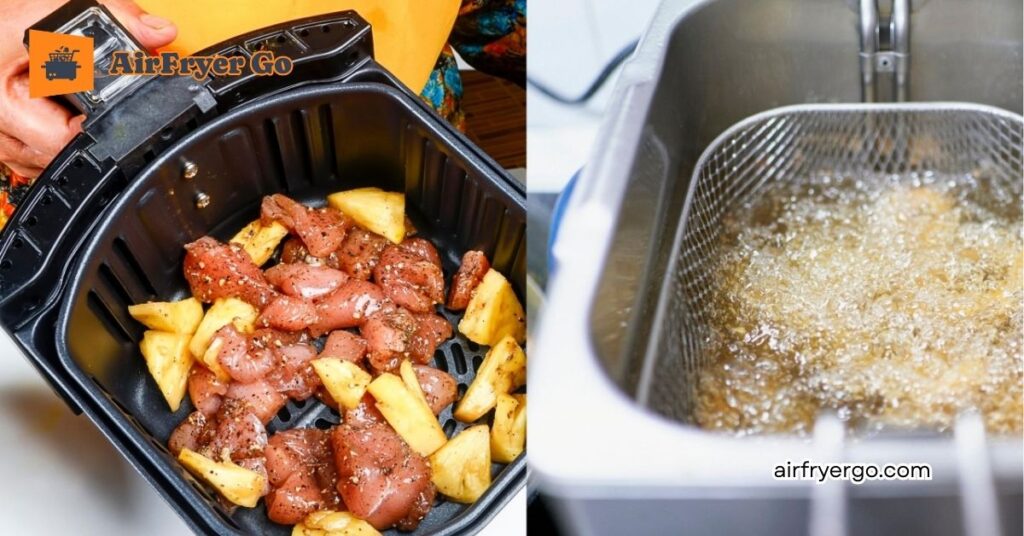
To understand the Air Fryer vs Deep Fryer debate, we have to look at how heat is transferred to your food. While both aim for a “crispy” result, the medium they use—liquid vs. gas—changes the chemistry of your meal.
Here is the breakdown from the AirFryer Go technical perspective:
1. The Deep Fryer: Thermal Immersion (Hot Oil)
Deep frying relies on liquid conduction. When you drop food into a vat of hot oil, the heat transfer is instantaneous and uniform.
- The Mechanism: The oil acts as a high-temperature bath (usually 175 – 190 °C). Because liquid is much denser than air, it forced heat into every nook and cranny of the food immediately.
- The Reaction: The moisture inside the food turns to steam, pushing outward (which creates those characteristic bubbles). This steam barrier prevents some oil from entering, but as the food cools, the oil settles into the surface, creating that rich, heavy mouthfeel.
- Result: A thick, “shattering” crust and a moist, fatty interior.
2. The Air Fryer: High-Speed Convection (Hot Air)
An air fryer is essentially a “supercharged” convection oven. It relies on gas convection to mimic the effects of oil.
- The Mechanism: A heating element generates intense dry heat, while a high-powered fan circulates that air at incredible speeds. This is often called “Rapid Air Technology.”
- The Reaction: The fast-moving air strips moisture away from the surface of the food. This triggers the Maillard Reaction—the chemical reaction between amino acids and reducing sugars that gives browned food its distinctive flavor—without needing to submerge the food in fat.
- Result: A light, “toasted” crispness that feels clean rather than greasy.
Technical Comparison: The “Fry” Factor
| Feature | Deep Fryer (Oil) | Air Fryer (Air) |
| Heat Medium | Liquid Fat (High Density) | Moving Gas (Low Density) |
| Heat Transfer | Extremely Fast & Constant | Fast (But requires air circulation) |
| Surface Finish | Saturation (Crispy + Greasy) | Dehydration (Crispy + Dry) |
| Flavor Profile | Rich, Savory, “Fat-forward” | Natural, Toasted, “Ingredient-forward” |
A Note from AirFryer Go: The biggest difference is the “Wet Batter” rule. Because an air fryer uses moving wind, wet batters (like beer-battered fish) will simply blow off or drip through the basket before they can set. Deep fryers “flash-set” wet batters instantly, which is why they remain the king for traditional tempura or fish and chips.
>>> Read More: The Ultimate Capacity Guide: What Size Air Fryer Do I Need?
Head-to-Head: The 4 Pillars of Comparison

When we put the Air Fryer vs Deep Fryer to the test, the winner depends on your priorities. At AirFryer Go, we evaluate these appliances based on the four pillars that actually impact your daily life: Health, Taste, Convenience, and Cost.
1. Health & Nutrition: The Calorie Gap
This is the most significant divergence between the two.
- The Air Fryer Winner: By using air instead of oil, you reduce fat content by roughly 70% to 80%. A serving of deep-fried fries can pack 15g of fat, while air-fried versions hover around 2g.
- Chemical Safety: Air frying significantly reduces the formation of Acrylamide, a compound linked to cancer that develops during high-heat, deep-oil frying of starchy foods.
2. Taste & Texture: The “Mouthfeel” Reality
- The Deep Fryer Edge: There is a specific “shattering” crunch and rich flavor that only oil can provide. It creates a heavy, indulgent texture that many associate with true “comfort food.”
- The Air Fryer Reality: It produces a “lighter” crisp. It’s more like a super-powered roast. While it’s 90% there, it doesn’t have that signature oily decadence. However, many users prefer this “cleaner” taste for daily meals.
3. Cleanup & Convenience: The Mess Factor
- Deep Fryer (The Chore): After cooking, you’re left with liters of used, smelly oil. You have to wait for it to cool, strain it, store it, or figure out how to dispose of it. Plus, the “fried smell” can linger in your curtains for days.
- Air Fryer (The Breeze): Most baskets are non-stick and dishwasher safe. There’s no oil to store, no splatter on your backsplash, and the built-in filters keep the smell to a minimum.
4. Cost of Operation: Energy vs. Ingredients
- Ingredient Costs: The cost of quality frying oil adds up. If you replace your oil frequently (as you should for health), a deep fryer becomes expensive to maintain.
- Electricity: Air fryers use high wattage but cook very quickly.
- AirFryer Go Insight: While the initial price of the machine matters, the long-term savings on oil often make the Air Fryer the more economical choice for the average household.
The Comparison Matrix
| Pillar | Deep Fryer | Air Fryer | Winner |
| Health | High Fat/Calories | Low Fat/Calories | Air Fryer |
| Texture | Indulgent & Shattering | Light & Toasted | Deep Fryer |
| Cleanup | Difficult (Oil Disposal) | Easy (Dishwasher Safe) | Air Fryer |
| Smell | Heavy & Lingering | Minimal | Air Fryer |
Expert Reminder: If you choose a Deep Fryer, never pour used oil down the sink—it’s a disaster for your plumbing. If you choose an Air Fryer, remember that our price guides are estimates; always check your local kitchen’s power capacity, as these machines draw significant energy during their “crunch” cycles.
Safety: Fire Hazards vs. Countertop Heat
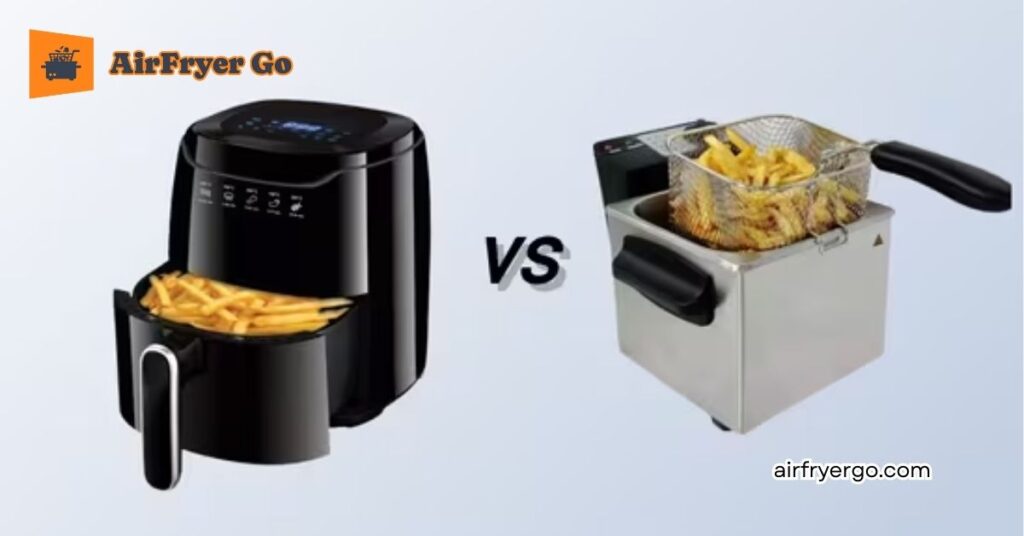
Safety is often the most overlooked factor in the Air Fryer vs Deep Fryer debate, yet it is arguably the most important. At AirFryer Go, we prioritize your kitchen’s longevity and your family’s protection. Both appliances involve high temperatures, but they present very different risks.
1. Deep Fryer: The Risk of Open Fire and Scalding
The deep fryer is traditionally considered one of the most dangerous appliances in the home kitchen due to the nature of boiling oil.
- Grease Fires: Oil is highly flammable. If a deep fryer’s thermostat fails or the oil is heated past its smoke point, it can ignite instantly.
- The “Boil-Over” Effect: Dropping food with too much moisture (or ice crystals from frozen wings) into hot oil causes an immediate, violent reaction. The oil can surge over the sides, leading to severe splatter burns or hitting the heating element.
- Storage Hazards: A vat of 2 liters of liquid at 190°C is a massive tipping hazard, especially in households with pets or children.
2. Air Fryer: The Risk of Airflow and Electrical Draw
While the air fryer eliminates the “boiling oil” variable, it introduces its own set of environmental requirements.
- Ventilation & Clearance: Air fryers exhaust intense dry heat (often over 200°C) from the rear. Placing them too close to plastic-coated backsplashes or beneath low-hanging wooden cabinets can cause melting, warping, or even localized charring.
- Heating Element Debris: If light foods fly upward into the heating element due to the high-speed fan, they can smoke or catch fire.
- The Power Draw: Air fryers pull a significant amount of electricity (1,500W to 1,800W). Running one on an old circuit or a low-quality power strip is a common cause of tripped breakers or melted outlets.
Safety Comparison Checklist
| Hazard Type | Deep Fryer | Air Fryer |
| Burn Risk | High (Hot oil splatter) | Low (External surfaces stay warm) |
| Fire Risk | High (Grease fires/Flash point) | Low (Internal heating element) |
| Kitchen Damage | Oil residue/Grease film on walls | Heat damage to cabinets/backsplash |
| Supervision | Must never be left unattended | Can be left for short durations |
To keep your kitchen safe in year, follow these two golden rules:
- For Air Fryers: Always maintain at least 5 inches (13cm) of open space around all sides of the unit. Never block the air intake or exhaust.
- For Deep Fryers: Keep a class “K” or “B” fire extinguisher nearby. Never use water to put out a grease fire.
Technical Reminder: As our guidelines state, price and capacity are just the start. We highly recommend a professional survey of your kitchen’s electrical health before adding high-wattage appliances. An overloaded circuit is a silent risk that no “gold-star” appliance can fix.
The Best Tool for the Job: Recipe Match-Up

In the Air Fryer vs Deep Fryer battle, the “best” machine often depends entirely on what’s on the menu tonight. At AirFryer Go, we’ve tested both across the most popular comfort foods to see where each technology shines.
Here is the ultimate recipe match-up:
1. Chicken Wings: The Air Fryer’s Crown Jewel
- The Winner: Air Fryer
- Why: Chicken wings are naturally high in fat. In an air fryer, that fat renders out and “self-frys” the skin to a crispy, parchment-like finish while keeping the inside juicy. Deep frying wings makes them delicious, but the extra oil often makes them feel overly heavy after the third or fourth piece.
2. Fresh Battered Fish (Fish & Chips): The Deep Fryer’s Stronghold
- The Winner: Deep Fryer
- Why: This is a physics limitation. A wet, beer-based batter needs to be “flash-set” by boiling oil to create that airy, puffed-up crust. In an air fryer, the high-speed wind will simply blow the wet batter off the fish or cause it to drip through the basket, leaving you with a soggy mess and a dirty machine.
3. Frozen Snacks (Fries, Nuggets, Mozzarella Sticks)
- The Winner: Air Fryer
- Why: These foods are usually pre-fried at the factory. The air fryer acts as a high-intensity “revival” chamber, removing the ice crystals and crisping the pre-existing oil. It’s faster, safer, and yields nearly identical results to a deep fryer without the hassle of heating 2 liters of oil.
4. Fresh Doughnuts and Churros
- The Winner: Deep Fryer
- Why: For dough-based treats, the immersion in oil provides a specific “pillowy” rise and a uniform golden exterior. Air-fried doughnuts tend to be more “bread-like” and can dry out quickly. If you want a true carnival-style doughnut, the deep fryer is the only way to go.
Quick Selection Guide
| If you are cooking… | Use the Air Fryer for: | Use the Deep Fryer for: |
| Vegetables | Brussels sprouts, Kale, Broccoli | (Not recommended – gets too oily) |
| Seafood | Salmon, Shrimp (breaded) | Tempura, Battered Cod |
| Sides | Roasted potatoes, Chickpeas | Traditional French Fries |
| Leftovers | Pizza, Egg rolls | (Do not use – gets soggy) |
If you want your air-fried food to taste closer to a deep fryer, use a high-smoke point oil spray (like avocado or grapeseed oil). A light, even mist on the surface of breaded items before cooking will help achieve that “shattering” crunch that air alone sometimes misses.
Lifestyle Match-Making: Which One Should You Buy?
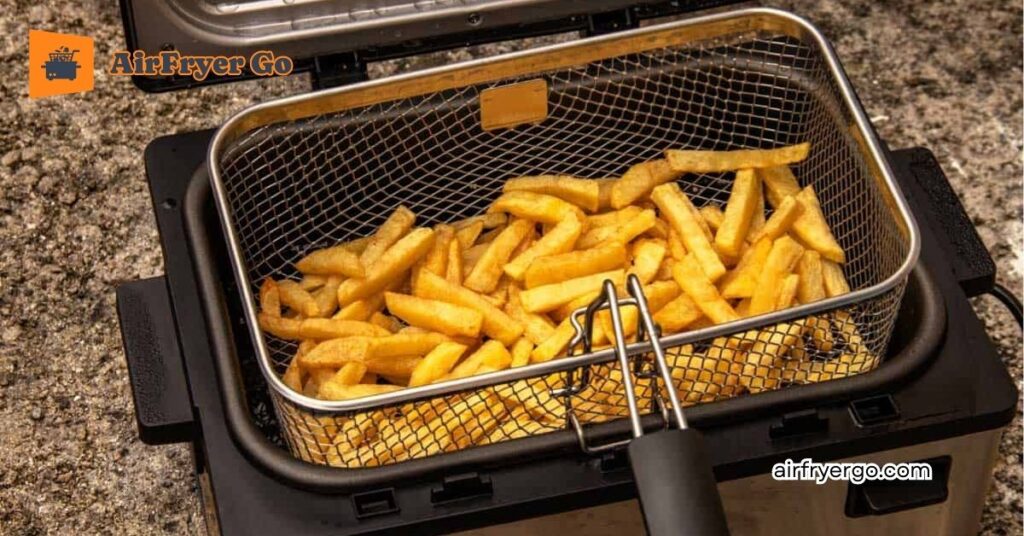
Choosing between an Air Fryer vs Deep Fryer isn’t just about the food; it’s about how much time, energy, and “mess-tolerance” you have after a long day. At AirFryer Go, we’ve categorized the two most common cooking personalities to help you decide.
1. The “Healthy & Hectic” Home Cook
- Your Lifestyle: You’re balancing a career, fitness, or a family. You want dinner on the table in 20 minutes, and you want to feel good after eating it.
- The Choice: Air Fryer.
- Why: It fits the “modern” pace. You don’t have to wait for oil to heat up, and you can walk away to help with homework or jump on a call while it cooks. It turns a weeknight bag of frozen veggies into a gourmet charred side dish with zero effort.
2. The “Weekend Gourmet” Traditionalist
- Your Lifestyle: Cooking is your hobby. You care about the “authentic” experience and believe that some things—like tempura or classic southern fried chicken—should never be compromised.
- The Choice: Deep Fryer.
- Why: You don’t mind the 30-minute cleanup if it means the texture is 100% authentic. You view the deep fryer as a specialized tool for Sunday feasts or hosting friends, rather than a daily appliance.
3. The “Small Space” Minimalist
- Your Lifestyle: You live in an apartment where counter space is at a premium and ventilation might not be the best.
- The Choice: Air Fryer.
- Why: A deep fryer will fill a small apartment with the smell of old oil for days. An air fryer is self-contained, easier to store, and doesn’t require you to find a place to hide a giant jug of used grease.
The Final Decision Matrix
| If you value… | The Air Fryer is for you if: | The Deep Fryer is for you if: |
| Speed | You want “instant” heat. | You don’t mind a 15-min pre-heat. |
| Daily Health | You’re cutting fat/calories. | Health is a “secondary” concern. |
| Texture | You like “toasted” and “crispy.” | You want “shattering” and “rich.” |
| Maintenance | You want dishwasher-safe parts. | You’re okay with straining/storing oil. |
For 90% of households in 2026, the Air Fryer is the clear winner for its versatility, safety, and health benefits. However, for that remaining 10% who live for the art of traditional frying, the Deep Fryer remains an essential, if occasional, companion.
Expert Guidance: As our saved guidelines suggest, any price list you see is just a reference. Before you buy, do a quick survey of your kitchen. Check if you have the 5-inch clearance for an air fryer’s exhaust, or if you have a safe, heat-proof surface for a deep fryer. Your safety and the machine’s longevity depend on the right environment.
Frequently Asked Questions (FAQs)
1. Can I use an Air Fryer to cook food with wet batter?
No. This is the most important rule. Wet batters (like beer-batter or thin tempura) will drip through the basket and blow around the chamber. If you want that classic “puffy” fried fish, the Deep Fryer is the only tool for the job. For the air fryer, stick to dry breading (flour, egg, then breadcrumbs).
2. Does air-fried food really taste the same as deep-fried?
It is very close—about 90% identical. The air fryer delivers the crunch and the golden color, but it lacks the “fatty richness” that oil provides. However, most people find that after two weeks of air frying, deep-fried food starts to taste “too heavy” or “greasy” by comparison.
3. Is it cheaper to run an Air Fryer than a Deep Fryer?
Yes. While both use electricity, the real saving is in the oil. A deep fryer requires liters of oil that must be replaced regularly to maintain flavor and health. With oil prices in 2026, the cost of “refilling” your deep fryer can quickly exceed the cost of the electricity used to run an air fryer for a whole month.
4. Can I put oil in an Air Fryer?
Yes, but only a tiny bit. You should never “fill” an air fryer with oil. Instead, use a spray bottle or a brush to apply a thin layer of oil directly onto your food. This helps conduct heat and results in a much crispier finish that mimics the deep fryer.
5. Which one is safer for a home with children?
The Air Fryer is significantly safer. It is a self-contained unit with no open vats of boiling liquid. While the exterior and exhaust can get hot, the risk of a catastrophic “splatter burn” or a grease fire is nearly eliminated compared to a traditional deep fryer.
Conclusion: The Future of Frying
As we look toward The Future of Frying, it’s clear that the kitchen landscape is shifting away from heavy, oil-soaked traditions toward efficiency, health, and precision. The Air Fryer vs Deep Fryer debate isn’t just about which machine makes a better fry—it’s about how we choose to fuel our bodies in a fast-paced world.
In year, the “Future” is already on our countertops. We are seeing air fryers become smarter, with integrated steam functions and dual-zone heating, while traditional deep frying is becoming a “boutique” cooking method—saved for special occasions and culinary purists.
At AirFryer Go, we want your transition to the future of cooking to be as smooth as possible. As you’ve seen throughout this guide, these high-performance machines require a bit of respect:
Expert Survey Reminder: Our pricing and capacity charts are designed to be your starting point, but every kitchen is unique. Always perform a quick survey of your countertop depth and ensure your electrical outlets are ready for the high-wattage demands of modern frying. A safe setup is the secret ingredient to a meal that truly nourishes.
Recommended next reads:
Microwave vs. Air Fryer: Which One Do You Actually Need?
Air Fryer or Convection Oven: Which One Should You Choose?
Air Fryer vs Instant Pot: Which Multi-Cooker is Right for You?


