


Deciding between a pressure cooker vs air fryer often feels like choosing between two entirely different ways of cooking, but the real struggle is knowing which one fits your daily routine and limited countertop space.
At AirFryer Go, we understand that you don’t need a professional-grade kitchen—you need a reliable partner for your weeknight meals. Instead of just listing endless technical specs, we are putting these two kitchen heavyweights to the test to help you figure out if you are firmly “Team Crispy” or “Team Tender,” ensuring you invest in the appliance that actually earns its place in your home.
>>> Read More: Best Air Fryer Reviews For Year: Top-Rated Picks for Every Kitchen & Budget
The Science of the Sear vs. The Power of Pressure
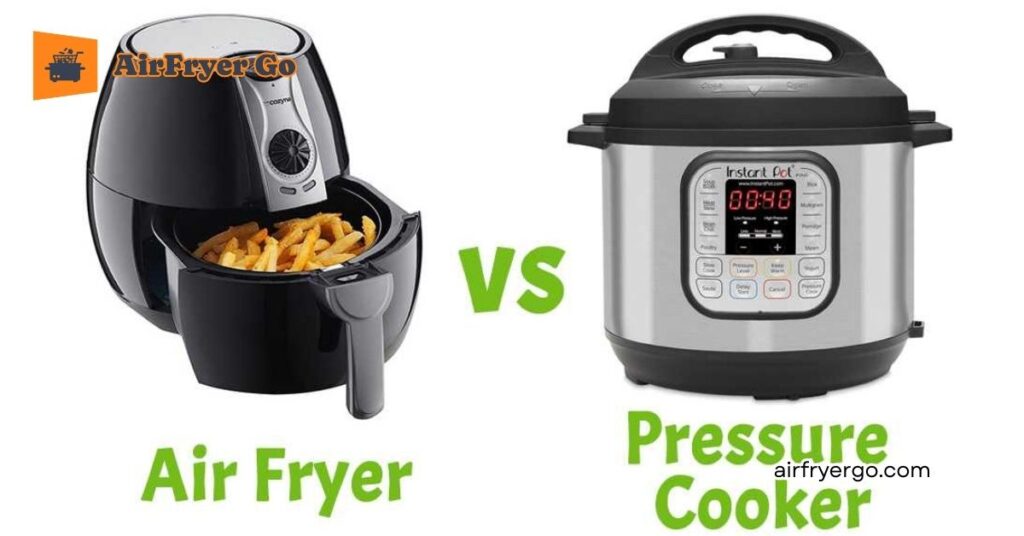
To truly understand the pressure cooker vs air fryer debate, we have to look past the buttons and look at the physics happening inside the pot. At AirFryer Go, we’ve found that the “best” choice usually depends on which scientific process your taste buds prefer: the dry heat of a fan or the intense force of steam.
Air Fryer: The Magic of the Maillard Reaction
The air fryer is essentially a high-powered convection oven on steroids. It relies on Dry Heat.
- The Mechanism: A concentrated heating element sits above a powerful fan that blasts hot air downward at high velocity.
- The Science: This creates the Maillard Reaction—a chemical reaction between amino acids and reducing sugars that gives browned food its distinctive flavor and “crunch.”
- The Result: Think of it as “sculpting” the exterior. It removes moisture from the surface of your food to create a crispy crust while keeping the inside cooked. This is why it’s the undisputed king for anything breaded, frozen, or naturally fatty like chicken wings.
Pressure Cooker: Breaking Fibers with Force
A pressure cooker operates on an entirely different principle: Moist Heat and Atmospheric Pressure.
- The Mechanism: By sealing the pot, the liquid inside boils and creates steam. Because the steam cannot escape, the internal pressure rises, forcing the boiling point of water to jump from 212°F (100°C) to nearly 250°F (121°C).
- The Science: This high-pressure environment forces moisture into the food, breaking down tough connective tissues (like collagen in beef) and softening hard fibers (như đậu khô hoặc gạo) in a fraction of the time.
- The Result: It doesn’t “sear” or “crisp.” Instead, it tenderizes. It creates a “melting” texture where flavors are infused deeply into every fiber, making it the hero of stews, broths, and pot roasts.
Texture Comparison: Crunchy vs. Succulent
| Feature | Air Fryer (Convection) | Pressure Cooker (Steam) |
| Surface Texture | Dry, crispy, and browned. | Moist, soft, and tender. |
| Interior Texture | Fluffy or juicy. | “Fall-off-the-bone” or gelatinous. |
| Best For… | The “Crunch” (Fries, Wings). | The “Infusion” (Curry, Risotto). |
The AirFryer Go Expert Insight: You can think of the air fryer as a finisher (perfect for texture) and the pressure cooker as a transformer (perfect for depth of flavor). This is exactly why hybrid models have become so popular—they attempt to combine these two opposing forces into one lid.
Round 1: Speed and Efficiency
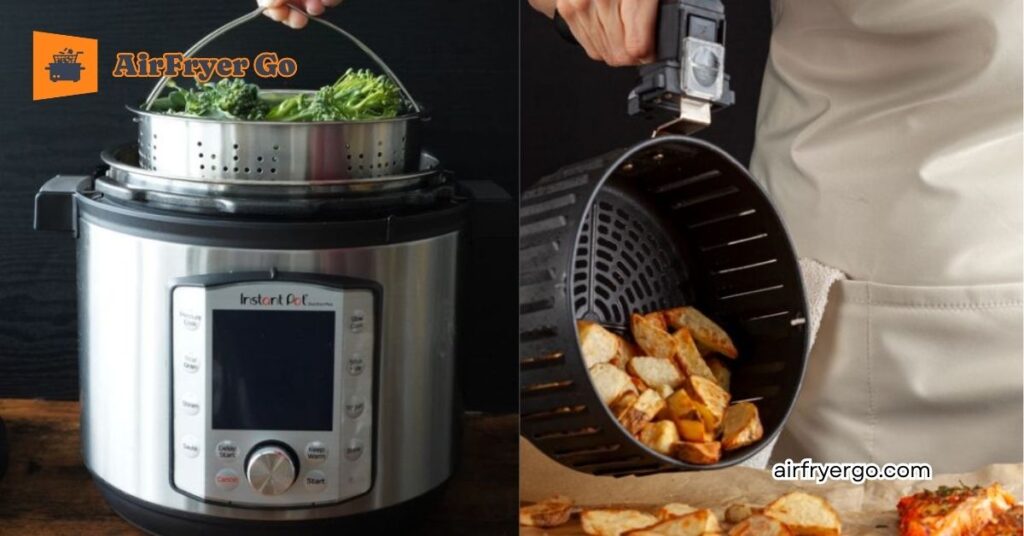
In the fast-paced world of the year, the winner of the pressure cooker vs air fryer debate often comes down to who gets you out of the kitchen and onto the couch the fastest. At AirFryer Go, we’ve timed these appliances down to the second, and the results might surprise you.
The “Frozen to Table” Race
When we talk about speed, we have to look at the total “wall-clock time”—from the moment you open the freezer to the moment you take the first bite.
- Air Fryer (The Instant Sprinter): The air fryer is the undisputed king of the “emergency meal.” Most models require zero to three minutes of preheating. If you want frozen chicken nuggets or spring rolls, they are crispy and ready in 10–12 minutes. It is essentially an “on-demand” cooking machine.
- Pressure Cooker (The Heavy Lifter): While a pressure cooker can cook a pot roast in 45 minutes (compared to 4 hours in an oven), it has a “hidden” timeline. You must account for the 10–15 minutes it takes to come to pressure and the 5–10 minutes for the steam to release. For small, quick snacks, the pressure cooker is actually slower.
Energy Efficiency: Saving Cents and Planet
Both appliances are vastly superior to a traditional oven, which wastes energy heating up a large, empty metal box.
- Air Fryer: Best for small batches. It uses intense, localized heat. In our AirFryer Go tests, it uses about 50% less energy than an oven for a single tray of roasted vegetables.
- Pressure Cooker: Best for bulk. Once it reaches pressure, the heating element cycles off frequently because the trapped steam retains heat so efficiently. For a large family meal, the pressure cooker is arguably the most energy-efficient tool in your kitchen.
Speed Breakdown by Dish
| Dish | Air Fryer (Total Time) | Pressure Cooker (Total Time) | Winner |
| Frozen Fries | 15 mins | N/A (Will be soggy) | Air Fryer |
| Whole Chicken | 45–55 mins (Crispy) | 35 mins (Tender/Melt-off-bone) | Pressure Cooker |
| Dry Beans/Legumes | N/A | 30–40 mins (No soaking) | Pressure Cooker |
| Reheating Pizza | 3–4 mins | N/A | Air Fryer |
The AirFryer Go Verdict on Speed: If your life is a series of “I need to eat in 15 minutes” moments, the Air Fryer is your winner. However, if your speed goal is turning a 5-hour slow-cook recipe into a 1-hour weeknight reality, the Pressure Cooker takes the gold.
Round 2: Versatility & Menu Depth
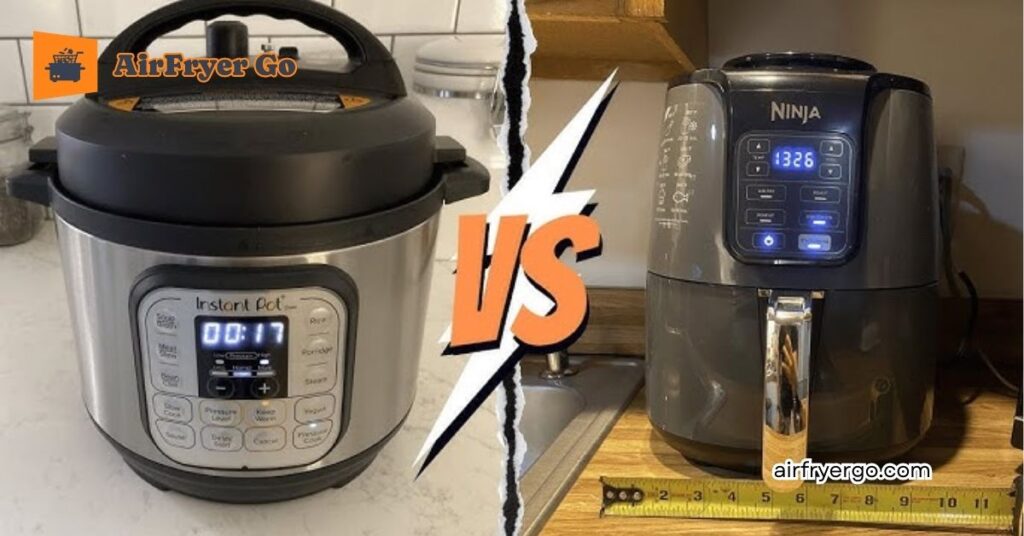
When we talk about versatility, we are really asking: “How many pages of my cookbook can this machine actually handle?” At AirFryer Go, we’ve pushed both appliances beyond their basic functions to see where they shine and where they stumble.
The Air Fryer: The King of Textures
The air fryer is your best friend for anything that requires a “bite.” Its menu depth excels in the “Crispy & Roasted” category:
- The Crunch Factor: Beyond fries, it’s incredible for roasted chickpeas, crispy tofu, and even “hard-boiled” eggs (yes, without water!).
- Baking & Pastries: Surprisingly, the air fryer acts as a compact convection oven for small-batch cookies, cinnamon rolls, and even lava cakes.
- The “Leftover” Hero: This is the only appliance that can bring a day-old croissant or soggy takeout fries back to life.
The Pressure Cooker: The Master of One-Pot Wonders
The pressure cooker (like an Instant Pot) is built for depth of flavor and “wet” cooking. It handles the dishes an air fryer simply can’t touch:
- Grains & Legumes: It cooks perfect brown rice in 15 minutes and dry black beans in 30 minutes—no soaking required.
- Liquids & Sauces: You can’t make soup, chili, or bone broth in an air fryer. The pressure cooker infuses flavors into liquids with incredible intensity.
- Dairy & Fermentation: Many modern pressure cookers have a “Yogurt” function or can be used for proofing bread dough in a warm, controlled environment.
Menu Comparison: The “Sunday Dinner” Test
To give you a clear picture, let’s look at how these two handle the same core ingredients:
| Ingredient | Air Fryer Result | Pressure Cooker Result |
| Whole Chicken | Rotisserie-style; crispy skin and golden fat. | “Poached” style; meat falls off the bone for shreds. |
| Potatoes | Roasted wedges or crispy cubes. | Creamy mashed potatoes (steamed perfectly). |
| Salmon | Seared exterior with a flaky, tender center. | Steamed and delicate (great for salads/bowls). |
| Vegetables | Charred broccoli or “fried” Brussels sprouts. | Soft, butter-infused carrots or corn on the cob. |
The “Versatility” Scorecard
- Air Fryer Score: 8/10. High versatility for snacks, sides, and reheating, but limited to “dry” foods.
- Pressure Cooker Score: 9/10. Incredible depth for main meals, soups, and grains, but it can never give you that satisfying “crunch.”
The AirFryer Go Kitchen Secret: If you’re a fan of Meal Prepping, the pressure cooker is usually the superior tool because it handles large volumes of bulk proteins and grains. However, for the Daily Snacker or the person who lives on roasted veggies and salmon, the air fryer will be your most-used tool.
Round 3: The “Ugly” Truth About Cleaning & Safety
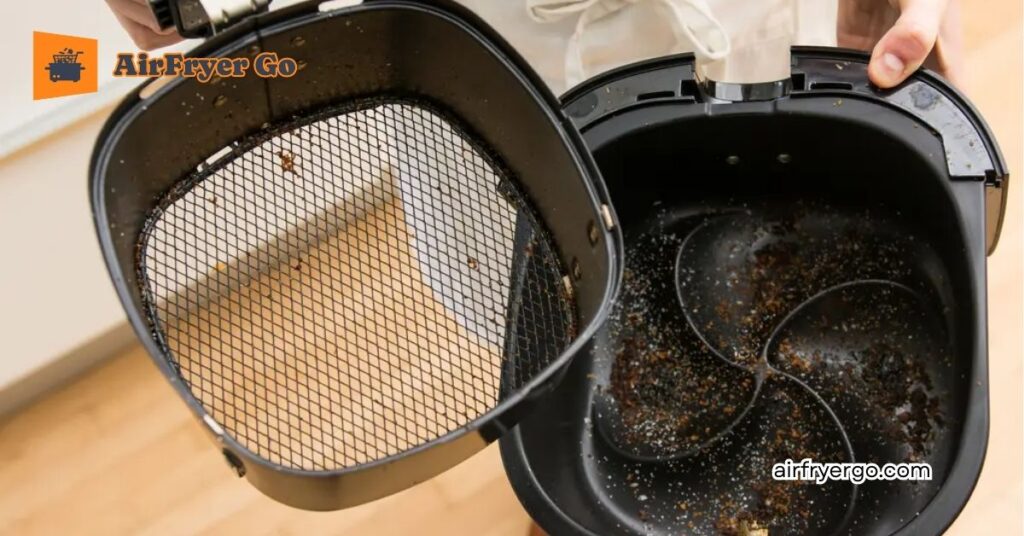
>>> Read More: How to Clean an Air Fryer: The Ultimate Guide to a Sparkling Machine
In the final round of the pressure cooker vs air fryer showdown, we step away from the dining table and move to the kitchen sink. At AirFryer Go, we know that if an appliance is a nightmare to clean or feels “scary” to operate, it will eventually end up in the back of your pantry.
Here is the unfiltered truth about maintenance and peace of mind.
1. The Scrub Factor: Which is Harder to Clean?
Cleaning is often the tie-breaker for our readers. Here’s how they stack up after a greasy meal:
- Air Fryer (The “Oily” Challenge): Most air fryers consist of a basket and a tray. While they are usually non-stick, they collect rendered fat and crumbs.
- The Pro: The parts are usually lightweight and easy to soak.
- The Con: The heating element (the coil) is located at the top and often gets splattered with grease over time. If you don’t wipe it down occasionally, it can start to smoke during future use.
- Pressure Cooker (The “Detail” Challenge): The inner pot is usually stainless steel—virtually indestructible and dishwasher safe.
- The Pro: No non-stick coating to peel off. You can scrub it as hard as you like.
- The Con: The Lid. Pressure cooker lids have silicone gaskets (sealing rings) that absorb odors (hello, onion and garlic smells!) and valves that must be checked for clogs. Cleaning the nooks and crannies of the lid is a significantly more detailed chore than washing a simple basket.
2. Safety: Myths vs. 2026 Reality
Safety is the area where we see the most misinformation. Let’s clear the air:
- Pressure Cookers: Many people still have “trauma” from their grandmother’s stove-top pressure cooker whistling like a steam engine. Modern electric versions have over 10 safety mechanisms, including sensors that prevent the lid from opening if there is still internal pressure. They are incredibly safe, though you must still be careful of the steam during a “quick release.”
- Air Fryers: The safety concerns here are more traditional. Because they use high-speed fans and intense heat, they can become a fire hazard if placed too close to curtains or if the basket is overfilled with parchment paper that touches the heating element.
Cleaning & Safety Comparison
| Metric | Air Fryer | Pressure Cooker |
| Dishwasher Safe? | Yes (But hand-wash for longevity) | Pot: Yes / Lid: Hand-wash |
| Odor Retention | Low | High (Silicone rings trap smells) |
| Complexity | Simple (2 main parts) | Complex (Pot, Lid, Valve, Gasket) |
| Primary Safety Risk | Overheating / Grease fire | Steam burns during release |
The AirFryer Go Durability Verdict
In our AirFryer Go testing lab, we’ve found that high-quality Pressure Cookers generally outlast Air Fryers. Why? Because Air Fryers rely on non-stick coatings that eventually wear out and high-speed fans that can burn out. A stainless steel pressure cooker pot, however, is nearly impossible to break.
The AirFryer Go Maintenance Tip: To get the “curry smell” out of your pressure cooker’s silicone ring, steam a cup of water with a few lemon slices for 5 minutes. For air fryers, always do a “dry run” for 2 minutes after washing to ensure the fan and heating coil are completely moisture-free.
The Hybrid Revolution: Can You Have Both?
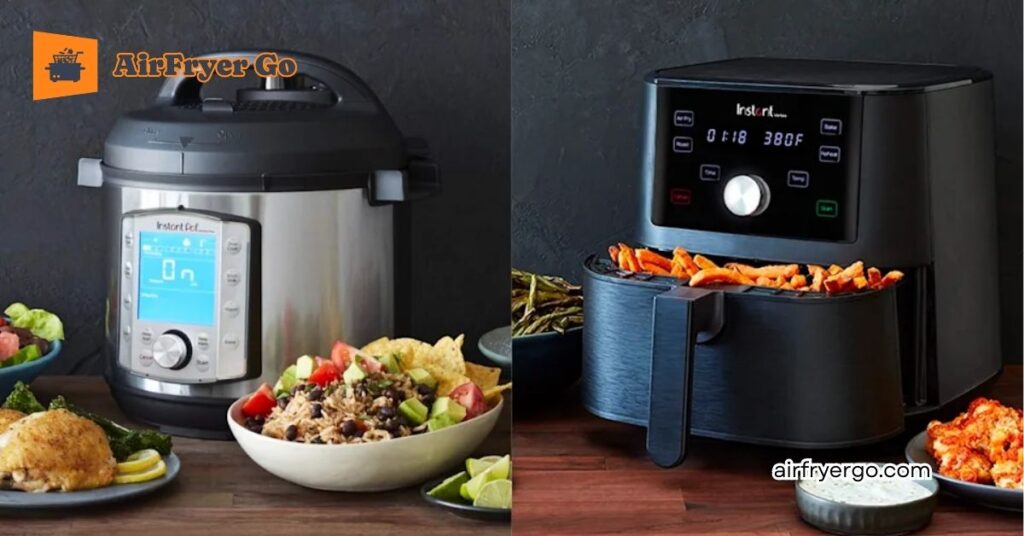
This year, the question is no longer just “this or that.” The industry has responded to our indecision with the Hybrid Multicooker—a single machine designed to handle both the “sear” and the “pressure.” At AirFryer Go, we’ve spent months testing whether these “all-in-one” units are truly the ultimate kitchen hack or just a bulky compromise.
How Hybrid Technology Works
Most hybrid machines (like the Ninja Foodi or Instant Pot Duo Crisp) are essentially pressure cookers with a specialized “Air Fry” lid.
- The Base: A heavy-duty heating element in the bottom for pressure cooking, sautéing, and slow cooking.
- The Lid(s): Some models use two separate interchangeable lids, while newer 2026 models feature a single “smart lid” that can switch between steam and convection airflow with the slide of a lever.
The Pros: Why a Hybrid Might Be Your Winner
- The “Tender-Crisp” Combo: This is the holy grail. You can pressure cook a whole chicken in 20 minutes to keep it juicy, then immediately air fry it for 5 minutes to get the skin crackling—all in the same pot.
- Space Saving: While a hybrid unit is larger than a standard air fryer, it takes up significantly less space than owning two separate large appliances.
- One-Pot Cleanup: You can sear your meat, pressure cook your stew, and crisp up a breadcrumb topping without ever moving the food to a different dish.
The Cons: The Trade-offs You Should Know
- The “Jack-of-all-trades” Trap: Because the pot is deep and narrow (designed for pressure), the air frying surface area is smaller than a dedicated “basket-style” air fryer. You’ll have to stack food more, which can lead to less even crisping.
- Weight and Bulk: These machines are heavy. If you don’t have a permanent spot for it on your counter, hauling it out of a low cabinet every day will feel like a workout.
- Price: You are paying for two technologies in one, which often makes these more expensive than buying a high-quality standalone unit.
Standalone vs. Hybrid: The AirFryer Go Comparison
| Feature | Standalone Units (Two Machines) | Hybrid Multicooker (One Machine) |
| Cooking Surface | Large and Wide (Superior Crisp) | Narrow and Deep (Average Crisp) |
| Simultaneous Cooking | You can use both at once. | You can only do one task at a time. |
| Kitchen Footprint | Takes up two spots. | One large, heavy spot. |
| Complexity | Simple, dedicated controls. | Steep learning curve with many modes. |
The AirFryer Go Recommendation: If you are a culinary explorer who loves recipes that start with a simmer and end with a crunch (like carnitas or pot pie), the Hybrid is a dream. However, if you usually cook a main in the oven and just want an air fryer for side-dish fries, stick to standalone units.
Decision Matrix: Who Are You?
At this stage of the pressure cooker vs air fryer journey, the technical specs matter less than your daily habits. At AirFryer Go, we’ve realized that people don’t just buy appliances; they buy “time-savers” for their specific lifestyle.
To help you decide, find the persona that sounds most like your Tuesday night:
1. The “I Need It Now” Parent (Team Air Fryer)
- Your Vibe: You walk through the door at 6:00 PM with hungry kids and zero plan.
- Your Menu: Frozen nuggets, fish sticks, broccoli florets, and reheating last night’s pizza.
- Why you need it: You don’t have time for a machine to “come to pressure.” You need instant heat and a satisfying crunch that mimics the fast food your kids actually want to eat.
- The Verdict: Stick to a high-capacity, basket-style Air Fryer.
2. The “Sunday Meal Prepper” (Team Pressure Cooker)
- Your Vibe: You spend your weekend preparing bulk proteins, grains, and stocks for the week ahead.
- Your Menu: 5 lbs of pulled pork, batches of brown rice, dry beans, and hearty beef chili.
- Why you need it: You care about volume and nutrient retention. You need a machine that can turn cheap, tough cuts of meat into tender “melt-in-your-mouth” meals while you do other chores.
- The Verdict: A stainless-steel Pressure Cooker is your best friend.
3. The “Healthy Gourmet” (Team Hybrid)
- Your Vibe: You love “real” cooking but want to cut down on oils and long stovetop simmering times.
- Your Menu: Whole roasted “Tender-Crisp” chickens, carnitas tacos, and vegetable risotto with a toasted parmesan crust.
- Why you need it: You want the depth of flavor that only pressure can provide, but you refuse to eat soggy skin or soft toppings. You want the best of both worlds and don’t mind the bulky footprint on your counter.
- The Verdict: Invest in a Hybrid Multicooker.
The AirFryer Go “One-Question” Test: If you could only eat one for the rest of your life—Fried Chicken or Beef Stew—which would it be? If you choose the chicken, get the Air Fryer. If you choose the stew, get the Pressure Cooker.
Frequently Asked Questions (FAQ)
1. Can I use an Air Fryer as a Pressure Cooker (or vice versa)?
No. These machines are fundamentally different. An air fryer is a “dry” heat tool (convection), and a pressure cooker is a “moist” heat tool (steam).
- The Risk: You cannot put liquid in an air fryer to create pressure, and you cannot get a “crisp” in a pressure cooker without a dedicated air-frying lid.
2. Which one is actually healthier?
Both are “healthy” compared to traditional deep frying, but they serve different goals:
- Air Fryer: Best for weight loss because it reduces oil consumption by up to 80% while maintaining the texture of fried food.
- Pressure Cooker: Best for nutrient density. Because it cooks food quickly in a sealed environment with very little water, it retains more vitamins and minerals than boiling or steaming on a stovetop.
3. Can I put frozen meat directly into a Pressure Cooker?
Yes! This is a major “superpower” of the pressure cooker. You can take a rock-solid frozen chicken breast and have it fully cooked and shreddable in about 20–25 minutes.
- Note: You can also cook frozen foods in an air fryer, but they won’t “tenderize” the same way; they will just roast/crisp.
4. Do I need to buy special accessories for my Pressure Cooker?
The most important accessory is a spare silicone sealing ring. At AirFryer Go, we always suggest having two: one for savory meals (garlic/onions) and one for sweet meals (yogurt/cheesecake). Those rings will trap odors, and you don’t want your vanilla cake smelling like beef stew!
5. Are Air Fryers and Pressure Cookers loud?
- Air Fryers: Sound like a loud hair dryer or a microwave fan. It’s a constant “whirring” noise.
- Pressure Cookers: Mostly silent during the cooking process. The only noise is the occasional hiss of steam or the loud “whoosh” during a manual pressure release.
Final Verdict: The AirFryer Go Scorecard
After comparing every sizzle and every puff of steam, we have reached the finish line. At AirFryer Go, we don’t believe in “one size fits all.” Instead, we believe in the right tool for the right craving.
The pressure cooker vs air fryer debate isn’t about which technology is superior—it’s about which one matches the rhythm of your kitchen. Here is our final, weighted scorecard to help you make the definitive choice for your 2026 home.
The Final Head-to-Head Scorecard
| Feature | Air Fryer | Pressure Cooker | The Winner |
| Texture & Crunch | ⭐⭐⭐⭐⭐ | ⭐ | Air Fryer |
| Tenderness & Depth | ⭐⭐ | ⭐⭐⭐⭐⭐ | Pressure Cooker |
| Speed (Small Meals) | ⭐⭐⭐⭐⭐ | ⭐⭐⭐ | Air Fryer |
| Speed (Bulk Cooking) | ⭐⭐⭐ | ⭐⭐⭐⭐⭐ | Pressure Cooker |
| Cleanup Ease | ⭐⭐⭐⭐ | ⭐⭐⭐ | Air Fryer |
| Longevity | ⭐⭐⭐ | ⭐⭐⭐⭐⭐ | Pressure Cooker |
Buy an Air Fryer if:
You live for the “crunch.” You are the person who wants a quick roasted salmon, crispy Brussels sprouts, or a fast way to make frozen snacks taste gourmet. It is the ultimate tool for individuals, couples, and families who prioritize texture and speed.
Buy a Pressure Cooker if:
You are a “set it and forget it” cook. You love the comfort of a rich beef stew, perfect risotto, or home-cooked beans. It is the powerhouse for meal preppers, large families, and anyone who wants to turn budget-friendly ingredients into high-end comfort food.
Buy a Hybrid if:
You refuse to compromise. If you want your ribs to be fall-off-the-bone tender and charred on the outside, a 2-in-1 multicooker is the only way to go. Just be prepared to give up a bit more counter space and budget.
In the present, the modern kitchen is becoming more specialized. If we had to choose just one for the average home? The Air Fryer takes a slight lead for its sheer daily convenience and “resurrection” powers for leftovers. However, if you are building a kitchen for serious, from-scratch cooking, the Pressure Cooker is a foundational tool you cannot ignore.
Whether you join “Team Crispy” with an air fryer or “Team Tender” with a pressure cooker, the ultimate goal is always a delicious, stress-free meal that fits your lifestyle. We hope this comparison has cleared the smoke and helped you find the perfect countertop companion. For more smart cooking tips and honest appliance reviews, keep following AirFryer Go—your guide to a faster, tastier kitchen!
Recommended next reads:
Microwave vs. Air Fryer: Which One Do You Actually Need?
Air Fryer or Convection Oven: Which One Should You Choose?
Air Fryer vs Deep Fryer: Is the Healthier Choice Actually Tastier?


