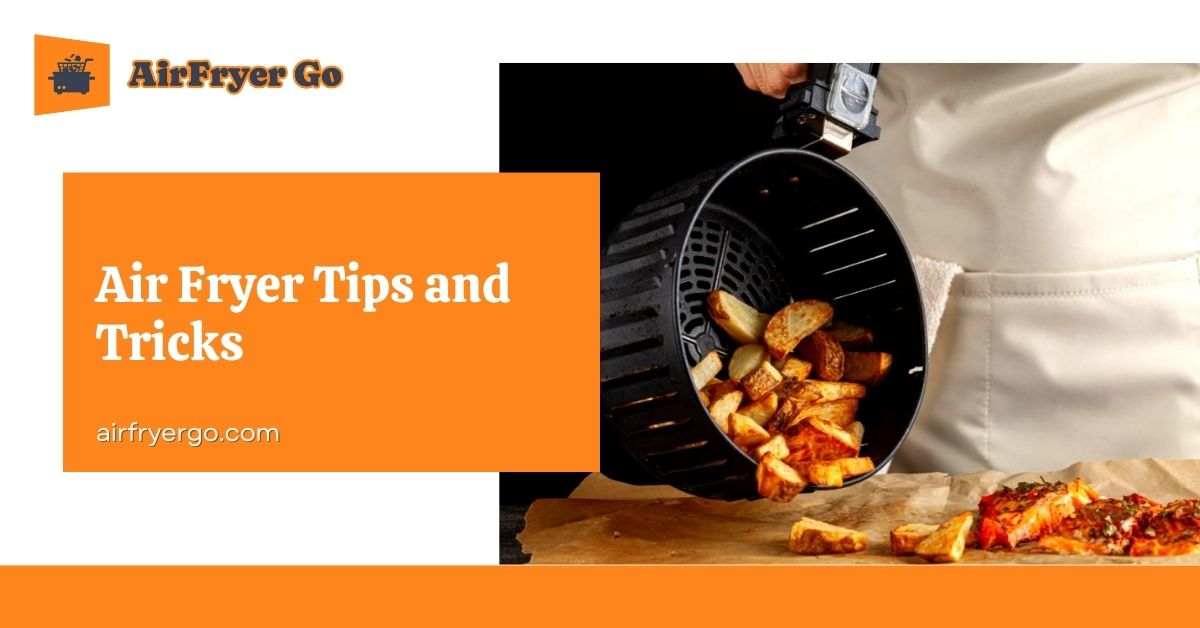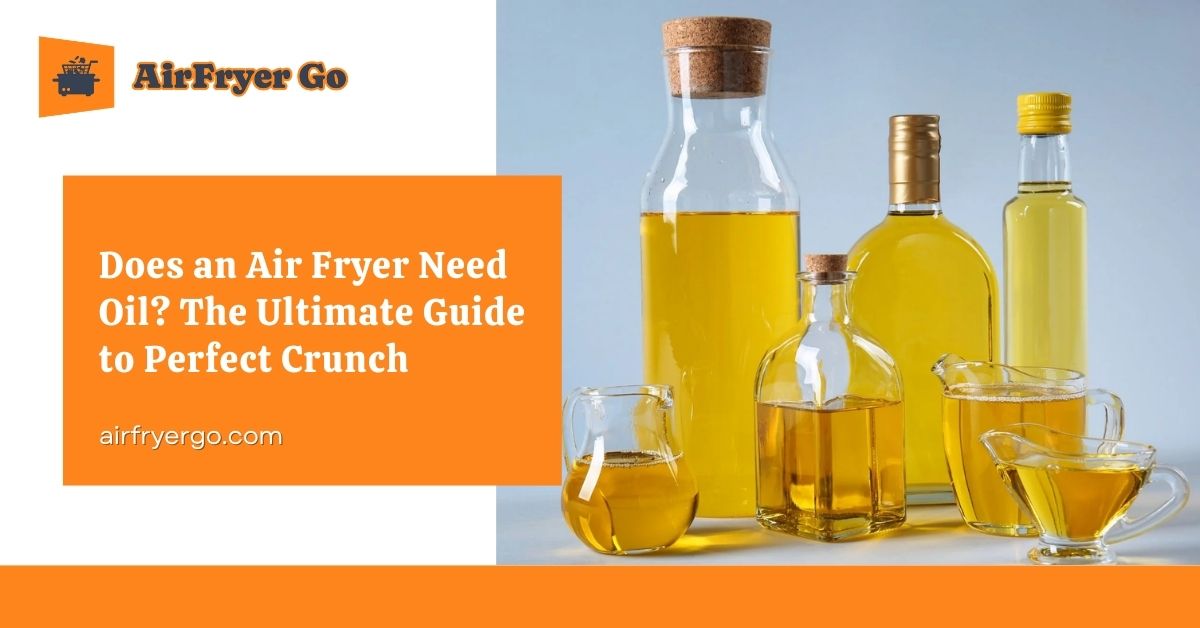
One of the most common questions new owners ask is, does an air fryer need oil to create those crispy, restaurant-quality meals we all crave? At AirFryer Go, we know that the “oil-free” label can be a bit confusing when you’re staring at a basket of dry-looking potatoes.
The truth is, while your machine functions perfectly without a single drop, a little bit of culinary intuition goes a long way. Let’s look at how you can achieve that signature golden crunch while keeping your meals light, healthy, and perfectly balanced.
>>> Read More: How to Use an Air Fryer: The Ultimate Master Guide (From Unboxing to Pro)
The Short Answer: Does an air fryer need oil?
Technically, the answer is no—your machine will run perfectly and cook your food even if you never touch a bottle of oil. But at AirFryer Go, we like to say there is a big difference between “cooking” and “cooking well.”
An air fryer is essentially a high-powered convection oven. It uses a fan to circulate intense heat, creating a “fried” effect through air rather than liquid fat. Because of this:
- The Machine: Does not require oil to operate. Unlike a deep fryer, there is no heating vat to fill.
- The Food: May need a tiny amount of oil to trigger the Maillard reaction—that chemical process that turns food golden-brown and crispy rather than just dry and gray.
Think of oil as a performance enhancer rather than a necessity. For foods that already contain fat (like chicken wings or frozen fries), adding oil is redundant. But for fresh vegetables or home-cut potatoes, a light misting—usually less than a teaspoon—is the secret bridge between a healthy meal and a delicious one.
When to Use Oil vs. When to Skip It
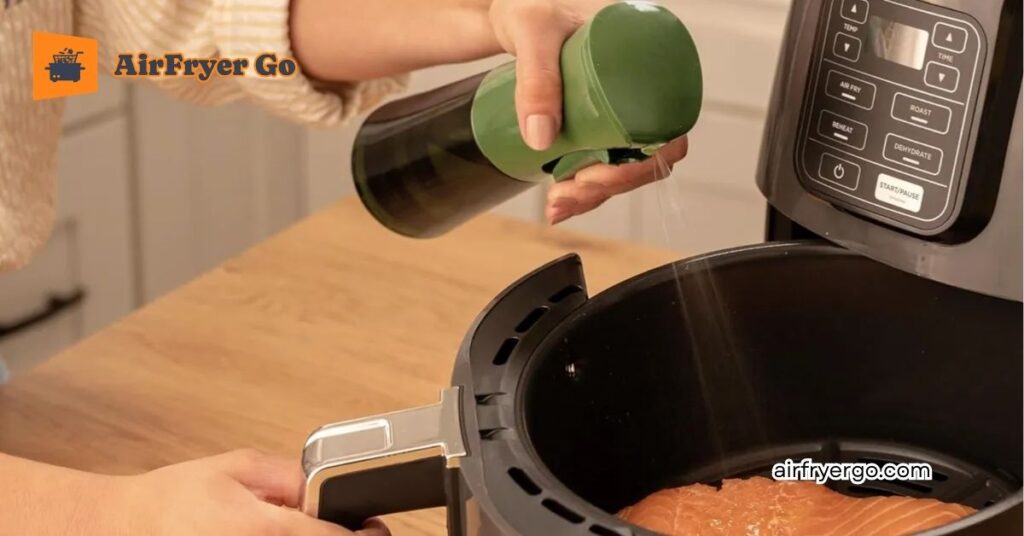
Knowing when to spritz and when to skip is what separates an air frying amateur from an AirFryer Go expert. It all comes down to the natural fat content already present in your ingredients.
Here is your quick-reference guide to getting the perfect balance every time.
1. When to Skip the Oil (0% Added Fat)
If the food you are cooking is already “self-basting,” adding more oil will only lead to a greasy mess or unnecessary smoke.
- Frozen Pre-Fried Foods: Frozen French fries, chicken nuggets, and mozzarella sticks have already been flash-fried in oil before being packaged. Adding more is unnecessary.
- Fatty Proteins: Bacon, chicken thighs (with skin), ribeye steak, and salmon are packed with natural fats. As the air fryer heats up, these fats render out, naturally crisping the exterior.
- Reheating Pizza: The cheese and crust already contain enough oil to crisp back up perfectly on their own.
2. When to Use a Light Spritz (The “Teaspoon” Rule)
For lean or fresh ingredients, a tiny amount of oil acts as a heat conductor, ensuring the hot air browns the surface before the inside dries out.
- Fresh Vegetables: Broccoli, asparagus, and Brussels sprouts need a light coating to prevent them from becoming “shriveled” or “papery.”
- Lean Proteins: Chicken breasts, pork tenderloin, or white fish have very little fat. A light mist helps lock in moisture.
- Fresh-Cut Potatoes: If you’re making fries from scratch, a small amount of oil is essential to get that classic golden-brown color.
The AirFryer Go Comparison Table
| Food Type | Oil Needed? | AirFryer Go Pro Tip |
| Frozen Snacks | No | Shake the basket halfway through for an even “pre-fried” crunch. |
| Fresh Root Veggies | Yes | Toss them in a bowl with 1 tsp of oil before putting them in the basket. |
| Chicken Wings | No | The skin has plenty of oil; just season and go! |
| Homemade Breaded Items | Yes | Give a light spray after breading to help the crumbs brown. |
AirFryer Go Secret: If you’re not sure, try the “Halfway Check.” If the food looks dull and white after 5–8 minutes, give it one tiny spritz of oil. If it’s already sizzling, leave it alone!
How to Correctly Use Oil in an Air Fryer
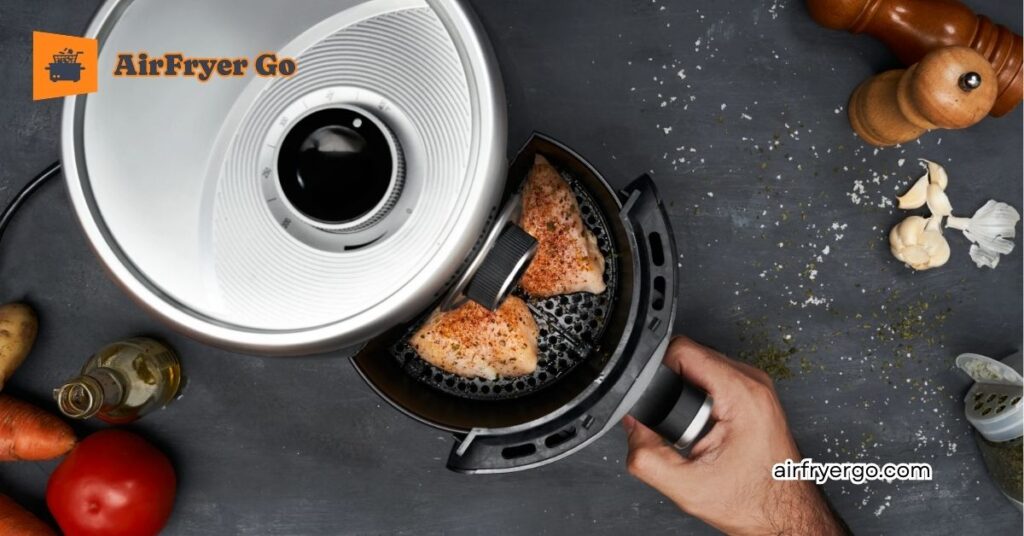
Knowing when to use oil is only half the battle; how you apply it determines whether your meal is a crispy success or a smoke-filled disaster. At AirFryer Go, we’ve seen many beginners make the mistake of treating their air fryer like a frying pan.
To keep your machine clean and your food light, follow these three golden rules of application.
1. The “Prep First” Method
The most effective way to use oil isn’t inside the air fryer at all. For fresh vegetables or hand-cut fries, toss them in a bowl with a teaspoon of oil before they ever touch the basket.
- Why it works: This ensures 100% even coverage. When you spray food inside the basket, the oil often hits the top layer while the bottom stays dry.
- The Result: Every piece gets that perfect crunch, and you use significantly less oil than “eye-balling” it with a spray.
2. The “Halfway Spritz” Technique
Sometimes, food looks a bit “dusty” or dry halfway through the cooking cycle. This is common with breaded items like chicken schnitzel or tofu.
- The Move: Pull the basket out at the halfway mark, give it a quick shake, and apply one very light mist of oil to any pale spots.
- Why it works: This “shocks” the surface with a fresh conductor for the heat, instantly browning the crumbs or skin.
3. Never Pour Oil Into the Basket
This is the number one mistake that leads to kitchen smoke.
- The Danger: Air fryers have holes in the basket to allow for airflow. If you pour oil directly in, it will drip through the holes and pool on the bottom of the drawer. Once that oil reaches its smoke point, it will fill your kitchen with acrid white smoke.
- The Safe Way: If you must coat the basket, dip a paper towel in a little oil and lightly wipe the grate before preheating.
AirFryer Go Application Checklist
| Technique | When to Use | The Result |
| Bowl Tossing | Fresh veggies, potatoes, legumes | Even browning, zero waste. |
| Misting/Spraying | Breaded items, lean meats | Crisp texture without sogginess. |
| Brush/Wipe | Fish or delicate items | Prevents sticking to the grate. |
AirFryer Go Warning: Avoid “Aerosol” cans at all costs. These contains chemicals that eat away at your basket’s non-stick coating. Always use a manual pump or a glass oil mister.
>>> Read More: Air Fryer: Is It Worth It? A Brutally Honest Guide to Pros & Cons
Best Oil for Air Fryers: High Smoke Points Matter
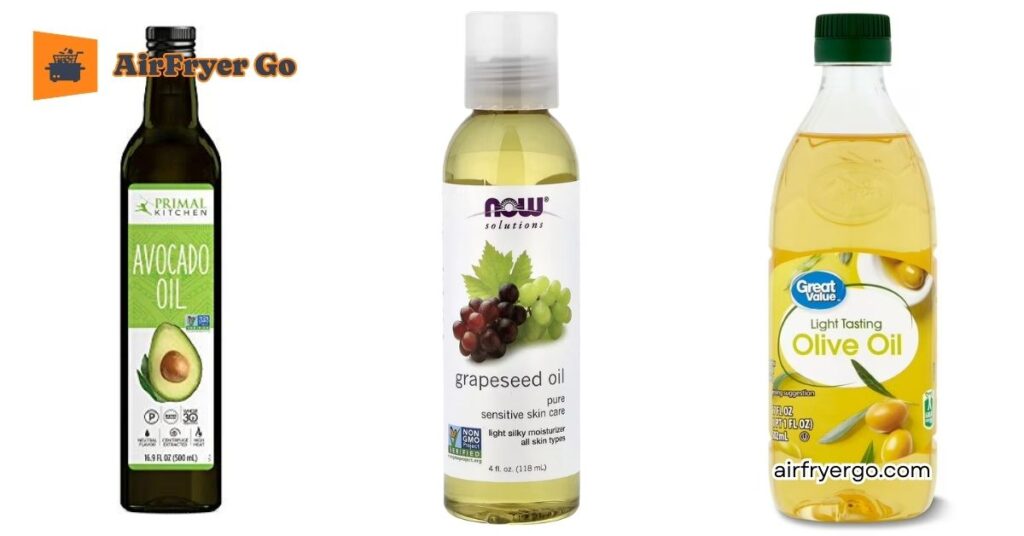
Choosing the right oil is the difference between a delicious meal and a kitchen full of smoke. At AirFryer Go, we emphasize one technical detail above all else: The Smoke Point.
Because air fryers use rapid, concentrated air (often reaching 200°C or 400°F), using an oil with a low smoke point will cause it to break down, release a bitter taste, and create unhealthy fumes.
1. Why the Smoke Point is Your Best Friend
The smoke point is the temperature at which an oil stops shimmering and starts burning. When an oil burns:
- It releases free radicals and acrid smoke.
- It ruins the flavor of your food.
- It can leave a sticky, “carbonized” residue on your air fryer basket that is nearly impossible to clean.
2. The AirFryer Go “Top 3” Oil Picks
For safety and performance, we recommend these three oils for your daily air frying:
- Avocado Oil (The Gold Standard): With a smoke point of approximately 270°C (520°F), it is virtually “smoke-proof” in an air fryer. It has a neutral taste and is heart-healthy.
- Grapeseed Oil: A great budget-friendly option with a smoke point of 215°C (420°F). It’s very light and won’t change the flavor of your fries or veggies.
- Light Olive Oil: Note the word “Light.” Unlike Extra Virgin, refined or light olive oil can handle temperatures up to 240°C (465°F), making it perfect for Mediterranean-style air frying.
3. Oils to Use with Caution (or Skip Entirely)
- Extra Virgin Olive Oil (EVOO): While healthy, its smoke point is only around 190°C (375°F). If you’re air frying at the max setting, EVOO will smoke and turn bitter. Save it for drizzling after cooking.
- Butter: Butter burns at 150°C (300°F). If you want a buttery flavor, melt a little bit and toss your food in it after it comes out of the air fryer.
- Coconut Oil: It has a moderate smoke point (175°C / 350°F). It’s fine for low-temp baking but risky for high-heat “frying.”
AirFryer Go Smoke Point Comparison
| Oil Type | Smoke Point | AirFryer Go Rating |
| Avocado Oil | 270°C (520°F) | ⭐⭐⭐⭐⭐ (Best) |
| Light Olive Oil | 240°C (465°F) | ⭐⭐⭐⭐ (Great) |
| Peanut Oil | 230°C (450°F) | ⭐⭐⭐⭐ (Great for flavor) |
| Butter | 150°C (300°F) | ❌ (Avoid) |
AirFryer Go Pro Tip: Always check the label. Many “Vegetable Oil” blends contain cheap oils with inconsistent smoke points. Sticking to pure Avocado or Grapeseed oil is the safest bet for your health and your machine.
The “Hidden Danger”: Aerosol Sprays & Non-Stick Damage

This is the most critical lesson in the AirFryer Go handbook. You might think you’re being healthy by using a quick spray of a popular store-bought oil, but if that oil comes in a pressurized aerosol can, you are likely shortening the life of your appliance with every meal.
At AirFryer Go, we call this the “Silent Basket Killer.” Here is why those convenient cans are a hidden danger to your kitchen.
1. The Secret Ingredient: Soy Lecithin
Most aerosol oil sprays (like PAM or generic store brands) aren’t just pure oil. They contain an emulsifier called soy lecithin.
- The Reaction: At the high speeds and intense heat of an air fryer, soy lecithin undergoes a chemical change. It creates a gummy, plastic-like residue that bonds to the non-stick surface.
- The Result: Over time, this “gunk” builds up into a sticky layer that is impossible to wash off with standard soap. Eventually, the non-stick coating itself will begin to peel and flake away with the residue.
2. Harsh Propellants
Aerosol cans use propellants (like butane or propane) to turn the oil into a fine mist. While these are “food-safe” in small quantities, they are not designed for the concentrated, high-heat environment of an air fryer. These chemicals can cause premature degradation of the silicone or PTFE linings in your basket.
3. The “Peeling” Disaster
Once the lecithin buildup starts, users often try to scrub it off with abrasive sponges. This is the beginning of the end. Once the non-stick coating is scratched or compromised, your air fryer transitions from a healthy tool to a potential source of toxins.
AirFryer Go Comparison: Aerosol vs. Manual
| Feature | Aerosol Spray Cans | Manual Oil Misters |
| Ingredients | Oil + Lecithin + Propellants | 100% Pure Oil |
| Surface Impact | Causes gummy buildup & peeling | Protects and lubricates coating |
| Cost | Cheap upfront | Higher initial cost (bottle) |
| Sustainability | Disposable metal cans | Reusable glass/stainless steel |
The AirFryer Go Solution: Use a “Mister”
To avoid these hidden dangers, invest in a reusable oil mister (such as a Misto or a high-quality glass spray bottle).
- Fill it with your own pure Avocado or Grapeseed oil.
- You get the same fine mist without the chemicals.
- It’s better for your health, your wallet, and your air fryer’s longevity.
AirFryer Go Expert Tip: If your basket already has that “sticky” feeling, don’t use a metal scrubber! Make a paste of baking soda and a little water, let it sit for 30 minutes, and gently wipe it away with a soft cloth. It’s the safest way to “detox” your basket.
Troubleshooting: Why is My Air Fryer Smoking?
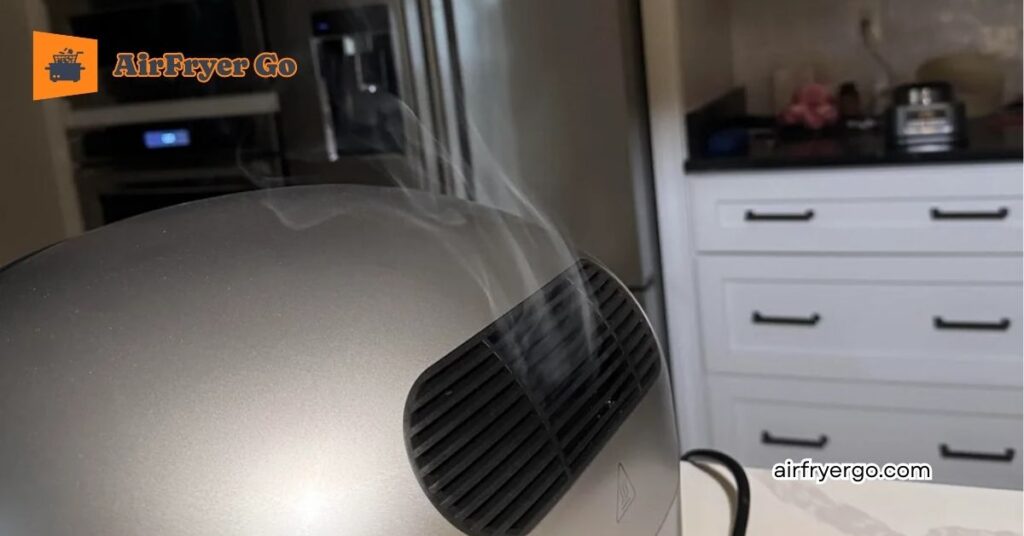
It is the ultimate kitchen buzzkill: you’re halfway through cooking a delicious meal, and suddenly, your smoke alarm is screaming. At AirFryer Go, we know that a smoking air fryer is usually a sign that something—likely oil or fat—is in the wrong place at the highest temperature.
Before you panic and unplug the machine, let’s identify the culprit and clear the air.
1. Cause: High-Fat “Runoff”
This is the most common reason for white smoke. When you cook high-fat foods like bacon, burgers, or chicken wings, the fat renders out and drips through the basket into the bottom drawer.
- The Physics: That pool of liquid fat sits directly under the heating element. As it reaches its smoke point, it begins to billow white smoke.
- The AirFryer Go Fix: Place a slice of bread or a tablespoon of water in the bottom of the outer drawer (under the basket). The bread acts as a sponge for the grease, while the water keeps the temperature of the bottom tray just cool enough to prevent the fat from burning.
2. Cause: Using the Wrong Oil
As we discussed in our smoke point guide, using butter or Extra Virgin Olive Oil at 200°C (400°F) is a recipe for disaster.
- The Physics: The oil literally catches fire at a microscopic level.
- The AirFryer Go Fix: Switch to Avocado Oil. If you are already mid-cook and it’s smoking, lower the temperature to 175°C (350°F) immediately.
3. Cause: The “Gunk” Build-up
If your air fryer smokes even when you aren’t cooking fatty foods, the problem is likely residual grease on the heating coil or the walls of the machine.
- The Physics: Old oil from a previous meal has carbonized on the heating element. Every time you turn the machine on, that “gunk” burns a little more.
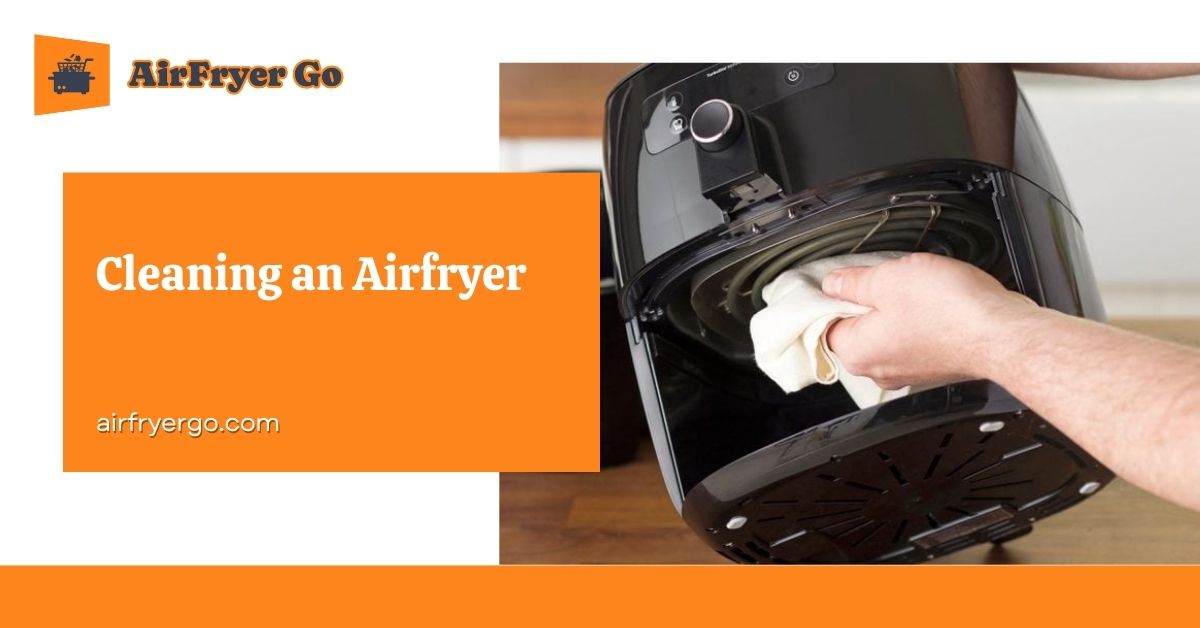
- The AirFryer Go Fix: Once the unit is completely cool, turn it upside down. Use a damp cloth with a little lemon juice or dish soap to wipe the heating coil. You’ll be surprised at how much hidden grease hides there!
AirFryer Go Smoke Identification Guide
| Smoke Color | Likely Cause | Immediate Action |
| White Smoke | Burning fat or water vapor | Add bread to the tray; lower temp. |
| Blue/Grey Smoke | Burning oil (wrong smoke point) | Switch to Avocado oil; clean the coil. |
| Black Smoke | Electrical / Plastic Burning | Turn off & unplug immediately! |
AirFryer Go Safety Warning: Never ignore black smoke or a strong smell of burning plastic. This indicates a mechanical failure or a piece of packaging left inside. If this happens, contact the manufacturer.
FAQ: Quick Answers for Daily Cooking
1. Can I put oil in the bottom of the air fryer?
No. You should never pour liquid oil into the outer drawer or the bottom of the air fryer. Air fryers work by circulating high-speed air; liquid oil at the bottom can splash onto the heating element, causing smoke, fire hazards, or mechanical damage. Only apply oil directly to the food or lightly grease the basket grate.
2. Can I use parchment paper with oil?
Yes, but with caution. You can lightly grease parchment paper to prevent sticking. However, never put parchment paper in the air fryer during preheating without food on top. The air will blow the paper into the heating element, where it can catch fire. Always ensure the food is heavy enough to weigh the paper down.
3. Is air-fried food still healthy if I add oil?
Absolutely. The beauty of the air fryer is the reduction of oil, not necessarily the total elimination. A traditional deep fryer requires liters of oil that the food soaks up. In an air fryer, you use about 1 teaspoon (approx. 5-10ml), which mostly stays on the surface to provide crunch. You’re still saving up to 80% of the calories and fat compared to deep frying.
4. What is the best oil spray for an air fryer?
The “best” spray isn’t a brand-name aerosol; it’s a manual oil mister filled with pure oil. At AirFryer Go, we recommend a glass or stainless steel pump sprayer filled with 100% Avocado Oil. It’s propellant-free, lecithin-free, and has the highest heat resistance.
5. Why does my food look “white” or “dusty” after air frying?
This usually happens with breaded items or starchy vegetables like potatoes when no oil is used. The “dust” is actually uncooked flour or starch. A tiny spritz of oil will dissolve that starch and allow it to brown and crisp up.
Conclusion: Elevate Your AirFryer Go Experience
Mastering the balance of oil in your kitchen doesn’t have to be a guessing game. As we’ve explored, the answer to “does an air fryer need oil” isn’t a simple yes or no—it’s about using oil as a strategic tool to unlock the best possible flavor and texture while keeping your health a priority.
By choosing high smoke-point oils, ditching damaging aerosols, and knowing exactly when to spritz or skip, you aren’t just cooking; you’re preserving the life of your appliance and the quality of your meals. The air fryer is designed to give you freedom, and these small adjustments ensure that freedom comes with a perfect, golden-brown crunch every single time.
At AirFryer Go, we are dedicated to helping you navigate these nuances so you can feel like a pro in your own kitchen. We believe that with the right techniques, your air fryer will become more than just a gadget—it will be your partner in creating a lifestyle that is as delicious as it is mindful.
Thank you for trusting us to guide your culinary journey. Now, grab your oil mister, pick your favorite recipe, and let’s get frying!
Recommended next reads:
How to Reheat Food in Air Fryer: The “Better-Than-Fresh” Master Guide
Can You Use Aluminum Foil in an Air Fryer? Everything You Need to Know