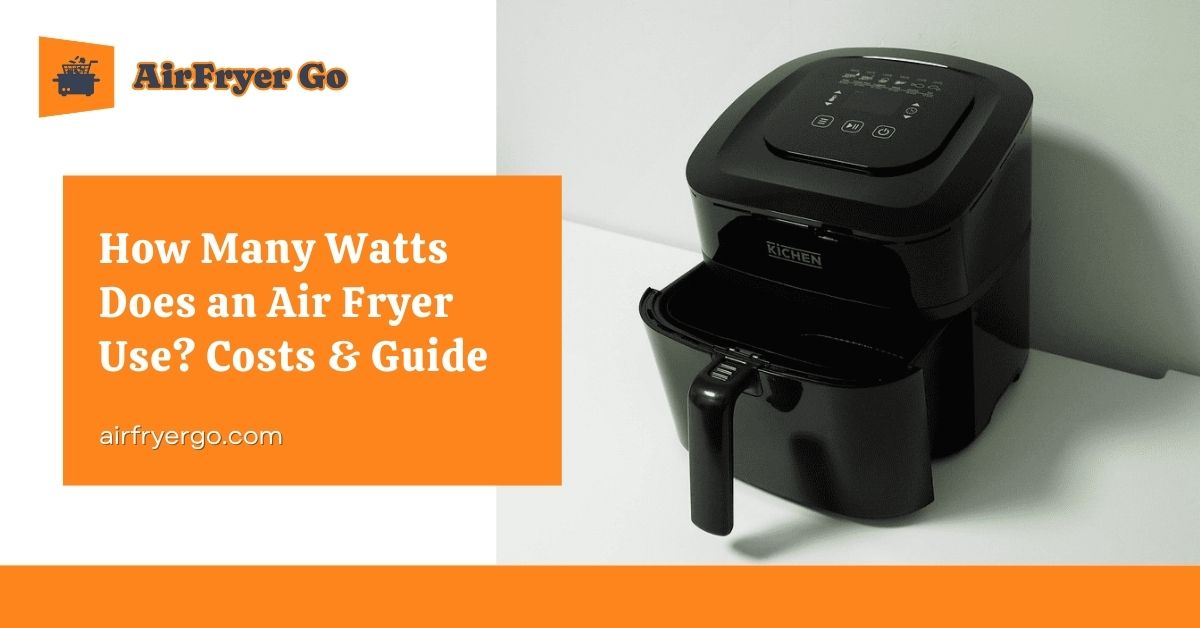
Many people worry about how many watts does an air fryer use, fearing that its high power will lead to a shocking electric bill. At AirFryer Go, we know those 1,500W labels can look intimidating at first glance.
However, high wattage actually translates to faster cooking and less energy waste compared to a traditional oven. Let’s break down the real-world costs and show you how this compact powerhouse can actually save you money on every meal.
>>> Read More: How to Use an Air Fryer: The Ultimate Master Guide (From Unboxing to Pro)
The Short Answer: Average Air Fryer Wattage Usage

The short answer is that most home models fall between 1,200 and 1,800 watts. At AirFryer Go, we’ve found that the “sweet spot” for most kitchens is around 1,500W—powerful enough to crisp food quickly without constantly tripping your circuit breaker.
However, wattage isn’t a “one size fits all” number. It scales directly with the size of the basket and the strength of the fan motor inside:
- Small (2–3L): Usually 1,000W – 1,200W. These are perfect for dorms or single servings.
- Medium (4–6L): Usually 1,400W – 1,700W. This is the standard family size you’ll see in most homes.
- Large/Oven Styles (10L+): Often 1,800W or more. These units have larger heating elements to cover the extra internal space.
Don’t be intimidated by a high wattage number. In the world of air frying, higher wattage often equals better efficiency. A 1,700W unit can reach cooking temperature in 2 minutes, whereas a lower-wattage unit might struggle for 5 or 6 minutes just to get hot, actually using more total electricity in the long run.
Does an Air Fryer Use a Lot of Electricity? (The Comparison)

The short answer is no, especially when you look at the bigger picture of your kitchen’s energy footprint. At AirFryer Go, we often see users surprised to learn that while an air fryer has a high “burst” of power, it is significantly more efficient than a traditional oven.
To understand why, we have to look at the Time vs. Power equation.
1. The Air Fryer vs. Traditional Oven Battle
A standard electric oven typically pulls between 2,000 and 5,000 watts. When you factor in the 15–20 minutes required just to preheat that massive metal box, you’ve already used more electricity than it takes to cook an entire meal in an air fryer.
- Traditional Oven: Heats a large, mostly empty space. Much of the energy escapes into your kitchen as heat.
- Air Fryer: Uses concentrated, high-speed convection in a tiny, insulated chamber. Almost 100% of the energy goes directly into the food.
2. The “Real-World” Efficiency Test
Let’s look at a common scenario: Cooking a batch of frozen fries for a family snack.
| Feature | Standard Electric Oven | AirFryer Go Recommended Unit |
| Wattage | 3,000W | 1,500W |
| Preheat Time | 15 Minutes | 3 Minutes |
| Cooking Time | 25 Minutes | 15 Minutes |
| Total Runtime | 40 Minutes | 18 Minutes |
| Energy Used | ~2.0 kWh | ~0.45 kWh |
The Result: The air fryer uses roughly 75% less electricity to do the exact same job.
3. Why “High Wattage” is Actually a Good Thing
At AirFryer Go, we explain it like this: A 1,700W air fryer isn’t “hungrier” for power; it’s just faster. Because it reaches searing temperatures almost instantly, the heating element cycles off more frequently once the target temp is hit. A low-wattage unit (like a 900W cheap model) often has to run the heater non-stop for the entire 20 minutes, which can lead to higher total consumption and soggier results.
AirFryer Go Efficiency Tip: If you’re cooking a small meal for 1–2 people, using a full-sized oven is like driving a semi-truck to buy a loaf of bread. The air fryer is your fuel-efficient commuter car.
How Many Watts Does an Air Fryer Use? (Doing the Math)

Numbers on a sticker can be confusing, but at AirFryer Go, we believe the best way to ease your mind is to look at the actual cents and dollars. To understand how much your air fryer costs to run, you only need to know two things: your machine’s wattage and your local electricity rate.
Let’s break down the “Air Fryer Math” so you can see the impact on your monthly budget.
1. The Simple Calculation
To find the cost, we use a basic three-step formula:
- Find the Kilowatts (kW): Divide your wattage by 1,000. (e.g., 1,500W / 1,000 = 1.5kW)
- Calculate the Energy (kWh): Multiply the kW by the time used in hours.
- Multiply by Cost: Multiply that number by your local electricity rate per kWh.
2. Real-World Example: The “Daily Dinner” Scenario
Let’s say you use a 1,700W air fryer for 20 minutes every single day.
- Power: 1.7kW
- Time: 0.33 hours (20 minutes)
- Daily Usage: 0.56kWh
- Cost (at avg. $0.16 per kWh): Approximately $0.09 (9 cents) per meal.
3. Monthly Comparison: Air Fryer vs. Traditional Oven
If you cook this same 20-minute meal every day for a month (30 days), here is how your bill looks:
| Appliance | Daily Cost | Monthly Total |
| AirFryer Go (1,700W) | $0.09 | $2.70 |
| Electric Oven (3,000W) | $0.32* | $9.60 |
*Note: Oven cost includes 15 minutes of preheating + 25 minutes of cooking.
Running your air fryer daily costs about as much as one fancy cup of coffee per month. When you compare the $2.70 monthly air fryer cost to the nearly $10.00 cost of a traditional oven, the “high wattage” of the air fryer actually becomes a massive money-saver.
AirFryer Go Saving Tip: If you live in an area with “Time-of-Use” electricity pricing, using your air fryer during off-peak hours can drop that monthly cost even further, sometimes to less than $1.50!
Amps and Safety: Can Your Kitchen Handle the Power?
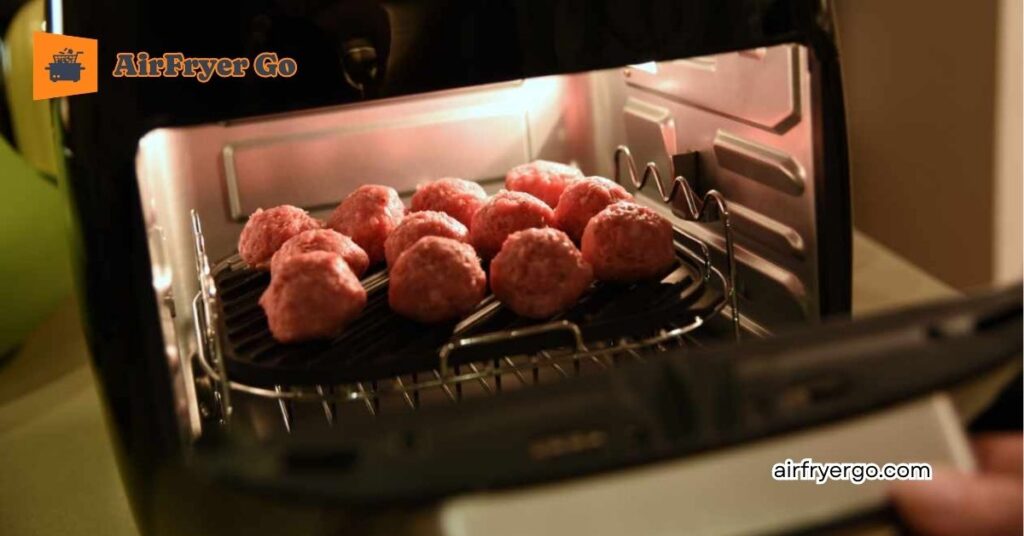
Understanding the amperage of your device is just as important as knowing the wattage. At AirFryer Go, we want to ensure your kitchen stays as safe as it is efficient. Most standard air fryers pull between 12 and 15 Amps of electrical current during operation.
Here is what you need to know to keep your home’s electrical system running smoothly:
1. The “Single Circuit” Rule
In many homes, a kitchen circuit is rated for 15 or 20 Amps. Because a 1,500W air fryer uses about 12.5 Amps on its own, it takes up nearly the entire capacity of that circuit.
- The Danger: If you run your air fryer and a microwave or a coffee maker on the same circuit at the same time, you will almost certainly “trip” the circuit breaker.
- The AirFryer Go Fix: Try to use your air fryer on a dedicated outlet, or ensure other high-power appliances are turned off while your air fryer is running.
2. Avoid Extension Cords
We strongly recommend plugging your air fryer directly into a wall outlet. Most common household extension cords are not rated to handle the high, sustained current that an air fryer requires.
- Why it matters: A thin extension cord can overheat, melt its plastic casing, and potentially start a fire.
- Safety First: If you must use one, ensure it is a “Heavy Duty” cord rated for 15 Amps or 1,800 Watts minimum.
3. Check Your Plugs Regularly
Every few months, take a look at the plug and the outlet for any signs of wear.
- Warning Signs: If the plug feels extremely hot to the touch after cooking, or if you see any discoloration (browning/scorching) on the outlet, stop using it immediately. This could indicate a loose wire or an overloaded circuit.
AirFryer Go Safety Checklist
- Plug directly into the wall whenever possible.
- Keep the cord away from the hot exhaust vent at the back of the machine.
- Do not “daisy chain” multiple power strips together.
- Ensure the outlet is dry and away from the kitchen sink.
AirFryer Go Expert Tip: If your kitchen is older, you might find that your lights flicker slightly when the air fryer kicks in. This is a sign that the appliance is drawing a significant load. While usually harmless, it’s a good reminder to keep that circuit clear of other heavy electronics while you cook.
Energy Efficiency: Why the Air Fryer is a “Green” Choice
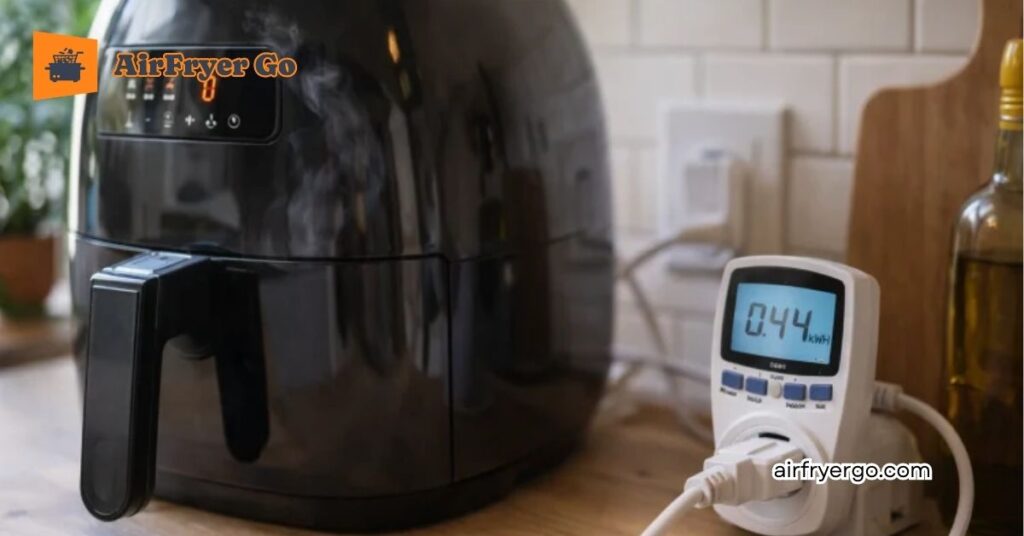
Sustainability isn’t just about the food you eat; it is about how you cook it. At AirFryer Go, we believe that efficiency is the ultimate form of eco-friendly cooking. While a high wattage might seem counterintuitive to “going green,” the air fryer is actually one of the most environmentally friendly appliances in your kitchen.
Here is why making the switch is a win for both your wallet and the planet:
1. Zero Wasted Space
A traditional oven is a massive metal box designed to hold multiple trays. When you use it to cook a single chicken breast or a side of roasted broccoli, you are spending energy to heat roughly 3 cubic feet of empty air.
- The Efficiency Factor: An air fryer is a compact, insulated chamber. It only heats the space your food actually occupies, ensuring that nearly 100% of the energy goes directly into the cooking process rather than warming up your kitchen walls.
2. Reduced “Preheat” Waste
Many ovens require 15 to 20 minutes of full-power heating before they are ready to cook. During this time, they are consuming thousands of watts without even touching your food.
- The AirFryer Go Difference: Most air fryers reach 200°C (400°F) in under 3 minutes. By eliminating the long preheat cycle, you significantly reduce the total kilowatt-hours (kWh) consumed per meal.
>>> Read More: Preheating Air Fryer: The Secret to Perfect Crunch for Every Brand
3. Keeping the Kitchen Cool
In the heat of summer, running a large oven can raise your kitchen’s temperature by several degrees. This forces your air conditioning system to work harder to compensate.
- The Ripple Effect: By using a well-insulated air fryer, you keep the heat contained. This lowers your home’s overall energy demand, saving you even more on your AC costs while lowering your household’s carbon footprint.
AirFryer Go “Green” Comparison
| Appliance | Energy Waste (Heat Loss) | Preheating Carbon Impact |
| Standard Oven | High (heats the whole room) | Significant (15+ mins) |
| Toaster Oven | Medium (poor insulation) | Moderate (5-8 mins) |
| AirFryer Go | Minimal (heats the basket) | Negligible (2-3 mins) |
AirFryer Go Eco-Tip: If you are cooking multiple batches, do them back-to-back! The air fryer retains an incredible amount of residual heat, so the second batch will cook even faster and use less energy than the first.
5 Tips to Maximize Air Fryer Energy Efficiency

Efficiency is at the heart of the AirFryer Go philosophy. Now that you know how many watts an air fryer uses, the next step is ensuring every watt counts. By following these five simple strategies, you can slash your cooking time and reduce your energy footprint even further.
1. Skip the Long Preheating Cycle
Unlike a traditional oven that needs 20 minutes to stabilize its temperature, most air fryers are ready to go in just 2 to 3 minutes.
- The Efficiency Hack: Don’t turn your air fryer on and walk away. Only start the preheat when your food is seasoned and ready to drop into the basket. Many recipes (like roasted vegetables) don’t even require a preheat—you can start from cold and just add 2 minutes to the total cook time.
2. Give the Exhaust Vent “Room to Breathe”
Your air fryer works by circulating high-speed hot air. If you push the machine directly against a wall or under a low cabinet, the intake and exhaust vents have to work twice as hard to maintain the temperature.
- The AirFryer Go Fix: Keep at least 5 inches (13cm) of open space around the unit. This prevents the motor from overworking and ensures the heating element doesn’t have to stay on longer than necessary to reach its target temp.
3. Clean the Heating Coil Regularly
Over time, grease and food particles can splash onto the heating element (the “coil” at the top of the chamber). This residue acts as an insulator, forcing the element to draw more power to push heat through the “gunk.”
- The Maintenance Move: Once a month, ensure the unit is unplugged and cool, then wipe the heating element with a damp cloth. A clean coil is a fast, energy-efficient coil.
4. Master the “Shake” and “Flip”
Air fryers cook from the top down. If your basket is crowded, the air can’t reach the bottom layers, leading to uneven cooking and longer runtimes.
- The Result: By shaking the basket halfway through or flipping your proteins, you ensure even heat distribution. This allows the food to cook up to 20% faster, saving both time and electricity.
5. Practice “Back-to-Back” Cooking
The air fryer’s insulation is incredibly effective. If you are cooking a main course and a side dish, cook them one after the other without letting the machine cool down in between.
- The Strategy: The residual heat from the first batch means the second batch won’t need a preheat at all, and the heating element will cycle on much less frequently to maintain the temperature.
AirFryer Go Efficiency Checklist
| Action | Energy Saving Potential |
| No/Short Preheat | High (Saves 5-10 mins of power) |
| Cleaning the Coil | Moderate (Improves heat transfer) |
| Sequential Cooking | High (Uses residual heat) |
| Proper Venting | Low-Moderate (Extends motor life) |
AirFryer Go Pro Tip: Always chop your vegetables or meat into uniform sizes. Smaller, even pieces cook significantly faster than large, irregular chunks, allowing you to turn the machine off sooner.
FAQs: Electricity and Power Usage
1. Does a bigger air fryer use more electricity?
Technically, yes, but the difference is often negligible. A larger 8-quart basket requires a more powerful heating element (usually 1,700W–1,800W) to heat the extra air space compared to a 3-quart model (1,200W). However, because you can cook more food at once in a larger unit, you avoid running multiple back-to-back cycles, which can actually save energy in a busy household.
2. Can I run an air fryer on a portable power station (Camping/Van Life)?
Yes, but you must check the “Continuous Output” rating of your power station. Since most air fryers pull 1,500W, you will need a high-capacity station (like a 2,000W unit) to handle the initial surge and sustained heat. Always check the “Amps” to ensure you don’t blow a fuse in your vehicle’s electrical system.
3. Does “Standby Mode” drain power?
Modern air fryers with digital displays do draw a tiny amount of “phantom power” when plugged in but not cooking—usually less than 1 watt. While this won’t break the bank, AirFryer Go recommends unplugging the unit when not in use for an extra layer of electrical safety and to save that tiny bit of energy.
4. Why did my air fryer trip the circuit breaker?
This usually happens because the air fryer is sharing a circuit with another high-wattage appliance. If your toaster, microwave, and air fryer are all running on the same 15-Amp kitchen circuit, the total draw exceeds the breaker’s limit.
- The Fix: Move the air fryer to a different outlet that isn’t shared with other heavy hitters.
5. Is a 1,800W air fryer “better” than a 1,500W one?
Not necessarily “better,” just “faster.” Higher wattage allows the coil to get hotter more quickly and the fan to spin more powerfully. If you value speed and the ultimate crunch, 1,800W is great. If you have older wiring in your home, a 1,200W–1,500W model is a safer, gentler choice.
Conclusion: Smart Savings with AirFryer Go
Mastering your kitchen’s energy consumption doesn’t have to be a guessing game of watts and amps. As we’ve explored, the answer to “how many watts does an air fryer use” is only half the story—the real magic lies in how efficiently that power is used to create the meals you love.
By choosing a right-sized unit, being mindful of your home’s electrical circuits, and using simple efficiency hacks like back-to-back cooking, you aren’t just saving a few cents on your monthly bill. You are embracing a modern, “green” way of cooking that respects both your time and the environment. The air fryer remains one of the most cost-effective tools in a home cook’s arsenal, proving that you don’t need a massive, energy-hungry oven to achieve a perfect, golden-brown crunch.
At AirFryer Go, we are dedicated to helping you navigate these technical nuances so you can feel empowered in your own kitchen. We believe that with the right knowledge, your air fryer becomes more than just a gadget—it becomes your partner in a lifestyle that is as sustainable as it is delicious.
Thank you for trusting us to guide your culinary and energy-saving journey. Now, it’s time to plug in, power up, and start frying!
Recommended next reads:
How to Reheat Food in Air Fryer: The “Better-Than-Fresh” Master Guide
Can You Use Aluminum Foil in an Air Fryer? Everything You Need to Know